

 ENG
ENG 中文简体
中文简体 русский
 Français
 Español
 日本語
日本語 عربى
عربىContent
- 1 Understanding Roller Conveyors in Integrated Systems
- 2 Combining Roller Conveyors with Belt Conveyors
- 3 Integration with Chain and Pallet Conveyor Systems
- 4 Roller Conveyors Combined with Sortation Systems
- 5 Combining Gravity and Powered Roller Conveyors
- 6 Control Systems and Automation Compatibility
- 7 Practical Benefits of Combining Roller Conveyors
- 8 Planning a Combined Roller Conveyor System
Understanding Roller Conveyors in Integrated Systems
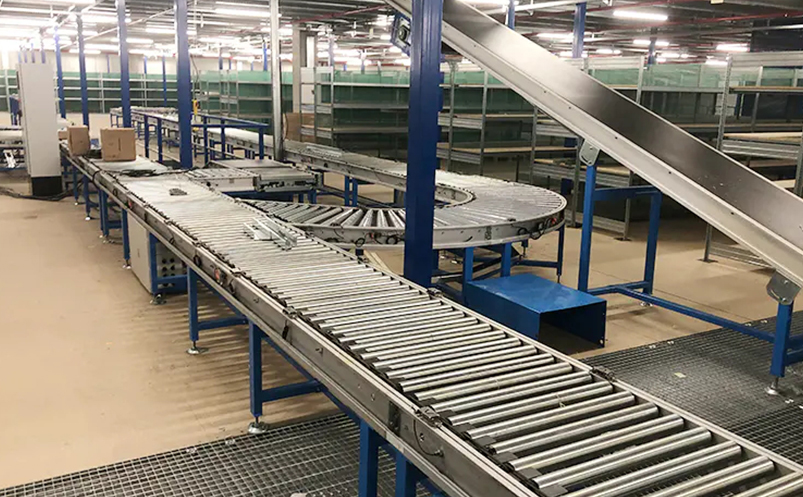
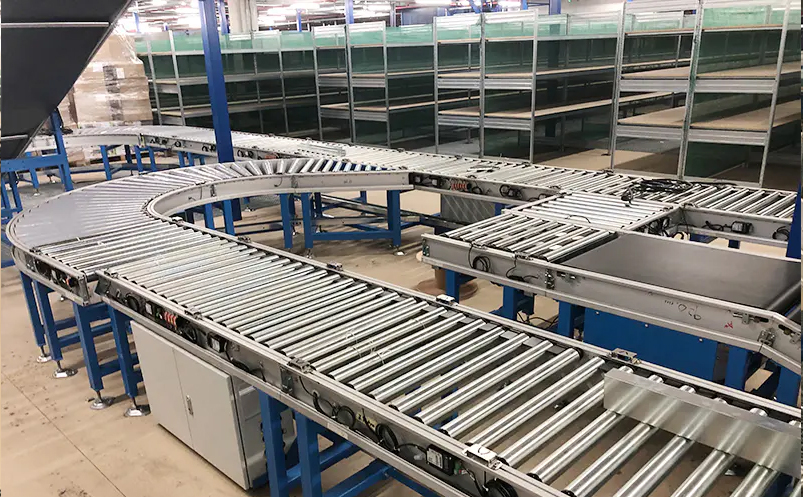
Roller conveyors are a core component in modern material handling equipment because they provide stable, low-friction transport for cartons, pallets, and totes. When combined with other conveyor systems, roller conveyors help form continuous, efficient flow paths across warehouses, factories, and distribution centers. Their modular design allows them to be connected with belt conveyors, chain conveyors, sortation systems, and automated equipment without complex structural changes.
In integrated layouts, roller conveyors often serve as transfer points, accumulation zones, or buffer sections. They support both gravity-driven and powered movement, making them suitable for mixed-speed or mixed-load environments. This flexibility is the main reason roller conveyors are commonly selected as the backbone of conveyor system integration projects.
Combining Roller Conveyors with Belt Conveyors
One of the most common integrations is combining roller conveyors with belt conveyors. Belt conveyors are ideal for continuous movement and handling irregularly shaped items, while roller conveyors excel at controlled accumulation and load stability. Together, they create balanced conveyor solutions that maintain flow while reducing product damage.
In practice, belt conveyors are often used for long-distance transport, while roller conveyors are positioned at loading, unloading, or sorting areas. Transition plates or small powered rollers ensure smooth transfers between the two systems. This combination is widely used in e-commerce fulfillment centers where cartons of varying sizes must move efficiently without tipping.
- Belt conveyors handle continuous transport across long distances.
- Roller conveyors provide accumulation and controlled spacing.
- Combined systems reduce energy use by limiting powered zones.
Integration with Chain and Pallet Conveyor Systems
Roller conveyors are frequently combined with chain conveyors and pallet conveyor systems in heavy-duty material handling. Pallets often require precise alignment and high load capacity, which chain conveyors provide. Roller conveyors are added before and after chain sections to manage pallet accumulation and transfers.
This combination is common in manufacturing plants, where pallets move between production stages, packaging lines, and storage areas. Roller conveyors act as buffers that prevent line stoppages when downstream equipment temporarily slows or stops.
| System Component | Primary Function | Typical Load |
| Roller Conveyor | Accumulation & Transfer | Cartons, Pallets |
| Chain Conveyor | Heavy Load Transport | Heavy Pallets |
Roller Conveyors Combined with Sortation Systems
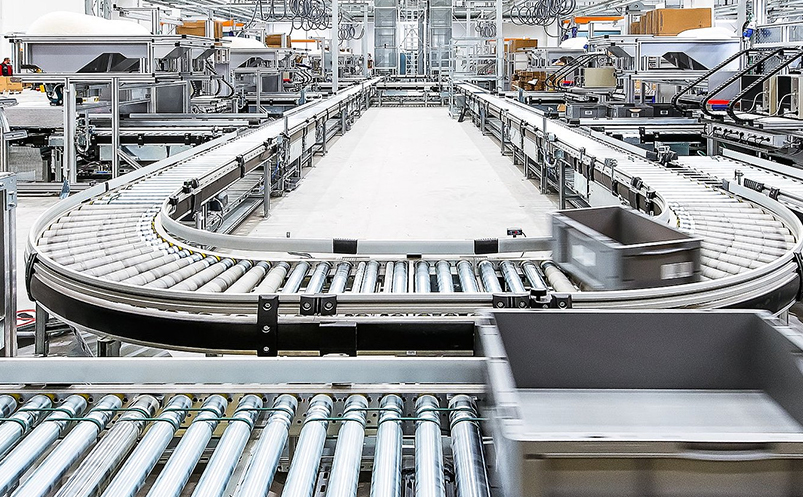
Sortation systems rely heavily on roller conveyors to feed, align, and divert products. Powered roller conveyors are commonly used before sorters to control product spacing and orientation. After sorting, gravity roller conveyors often guide products into chutes, lanes, or packing stations.
This combination improves throughput while maintaining accuracy. By integrating sensors and controls into roller conveyor zones, systems can dynamically adjust speeds and spacing based on real-time demand. This is especially valuable in parcel hubs and distribution centers handling high volumes of mixed SKUs.
Key Design Considerations for Sortation Integration
- Roller diameter and spacing must match product dimensions.
- Speed control is critical to maintain sorter accuracy.
- Accumulation zones reduce congestion before sorters.
Combining Gravity and Powered Roller Conveyors
Gravity roller conveyors are often combined with powered roller conveyors to balance cost and performance. Gravity sections are used where elevation changes allow products to move without motors, while powered sections provide control on flat or inclined surfaces.
This hybrid approach reduces energy consumption and maintenance requirements while maintaining consistent flow. It is widely used in warehouse conveyor solutions, particularly in picking and packing areas where manual interaction is frequent.
Control Systems and Automation Compatibility
When roller conveyors are combined with other systems, control integration becomes critical. Modern conveyor systems use programmable logic controllers, sensors, and variable frequency drives to synchronize movement across different conveyor types.
Zone-controlled roller conveyors are particularly effective in automated environments. Each zone can start or stop independently, allowing seamless interaction with robotic palletizers, automated storage systems, and packaging machines.
Practical Benefits of Combining Roller Conveyors
Combining roller conveyors with other conveyor technologies provides measurable operational benefits. These systems are easier to expand, reconfigure, and maintain compared to single-technology layouts. They also support higher throughput without requiring excessive energy input.
- Improved flow control and accumulation.
- Reduced product damage through smoother transfers.
- Greater flexibility for future system upgrades.
Planning a Combined Roller Conveyor System
Successful integration starts with understanding product characteristics, throughput requirements, and available space. Roller conveyors should be selected based on load weight, product size, and environmental conditions. Compatibility with existing conveyor systems must also be evaluated early in the design phase.
Working with experienced conveyor system designers ensures that transitions, controls, and safety features are properly implemented. A well-planned combined system delivers long-term reliability and supports operational growth without major redesigns.