

 ENG
ENG 中文简体
中文简体 русский
 Français
 Español
 日本語
日本語 عربى
عربىContent
Accumulating roller conveyors solve a critical challenge in automated material handling: the need to temporarily queue products without stopping the entire line and without causing product-to-product contact damage. The defining feature is zero-pressure accumulation, where items collect with a deliberate gap, eliminating collision force and pressure buildup. This capability transforms production flow by creating buffer zones that absorb speed differences between linked machines, preventing costly line stoppages and product damage simultaneously.
The Zero-Pressure Accumulation Principle
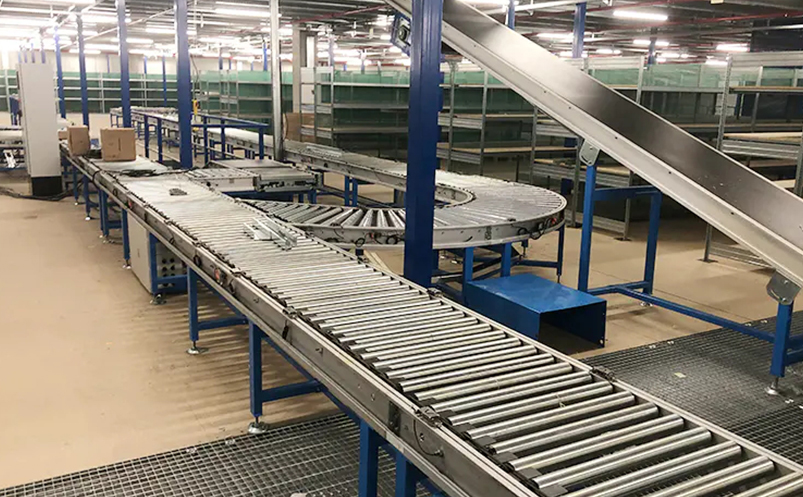
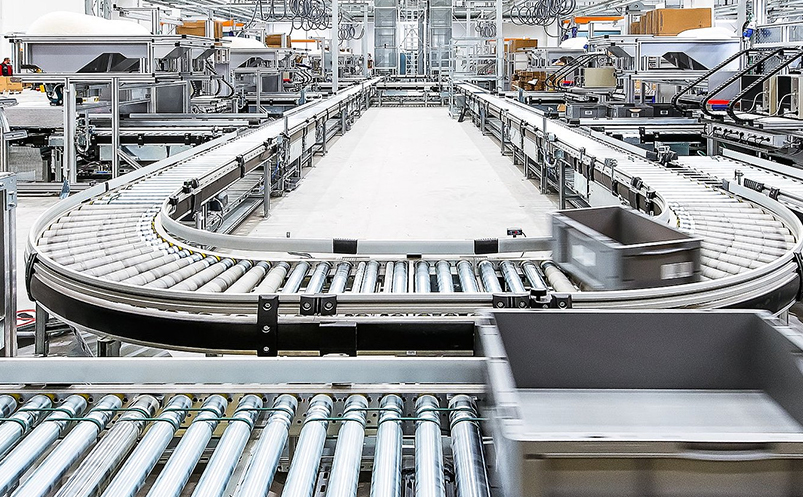
Unlike continuous-flow conveyors where items push against each other, zero-pressure accumulation uses individually controlled zones. Each zone contains a sensor and a clutch or motor stop. When a product enters a zone and the downstream zone is occupied, the rollers under that product stop turning while upstream zones keep conveying. This creates a controlled gap of at least 50 millimeters between products, effectively removing back pressure. The result is gentle handling suitable for fragile loads such as glass bottles, electronics, or painted parts that would be scratched by constant contact.
The technology relies on photoelectric sensors or mechanical flags to detect presence. A programmable logic controller or on-board zone controller then communicates stop and go signals to each roller zone. Accumulation density can be tuned; high-density accumulation reduces gap to just a few millimeters for space-critical lines, while low-density maintains larger separations for irregular shapes.
Key Types of Accumulation Systems
Several drive and control configurations deliver accumulation. The right choice depends on load weight, speed, environment, and desired energy profile. The table below summarises the most common technologies and their characteristics.
| Technology | Drive Method | Accumulation Principle | Ideal Application |
|---|---|---|---|
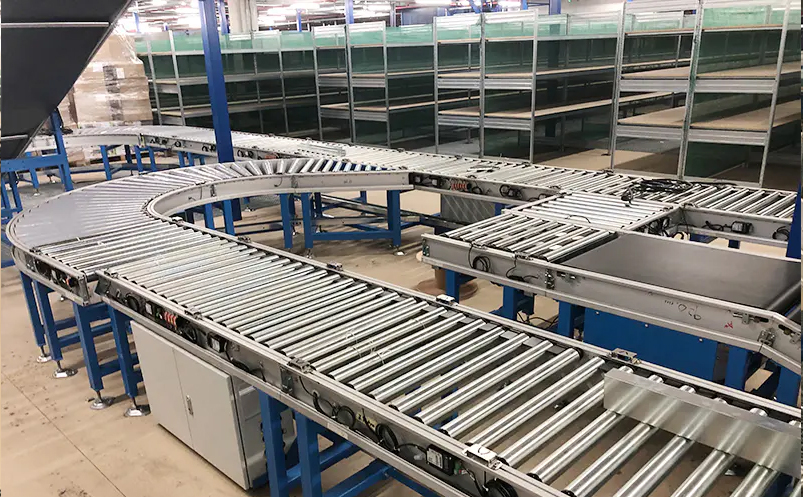
| Motorized Drive Roller (MDR) | 24V DC brushless motor inside roller | Individual zone stop via motor signal; zero-pressure | E-commerce, quiet warehouses, frequent start-stop |
| Belt-driven Roller with Pneumatic Clutch | Continuous belt drive, pneumatic zone clutch | Clutch disengages rollers per zone; product gap maintained | Heavy pallets, high-temperature areas |
| Line-shaft with Slip Clutch | Rotating line shaft, individual roller slip clutches | Roller stops when backpressure exceeds clutch torque; minimal control | Lightweight cartons, simple accumulation needs |
| Air-operated Roller Brake | Continuous belt or chain, pneumatic brake pads | Brake stops roller under sensor command; zero-pressure | Washdown environments, food processing |
Selecting the Right Conveyor for Your Load
The load characteristics dictate the conveyor design. Use the following checklist to narrow options:
- Product weight and bottom surface: Roller pitch must prevent product sagging. For cartons below 10 kg, a 75 mm roller pitch works; for totes up to 35 kg, increase to 100 mm or 150 mm.
- Accumulation density: High-density accumulation using closely spaced stops can save floor space by up to 25 percent compared to low-density layouts.
- Speed requirements: MDR systems typically achieve up to 60 meters per minute, while belt-driven roller systems exceed 100 meters per minute for high-speed packaging lines.
- Environmental factors: For wet or cold storage areas, sealed MDR or pneumatic brake options prevent corrosion and slip.
- Control integration: Zone controllers with Ethernet/IP or PROFINET allow real-time accumulation feedback to the plant management system.
Operational Advantages and Measurable Outcomes
Implementing zero-pressure accumulation roller conveyors yields tangible improvements. In a typical beverage filling line, inserting a 15-meter accumulation buffer between the filler and labeler reduced micro-stops caused by minor downstream jams by 22 percent. Another study in pharmaceutical packaging showed that contact-free accumulation lowered carton scuffing defects by over 30 percent, directly cutting rework costs.
Energy consumption also benefits. A comparison of a 24-meter MDR accumulation table with an equivalent continuous belt conveyor revealed that the MDR system used only 40 percent of the energy because rollers idle when no product is present. Payback periods under two years are common in two-shift operations due to reduced product loss and higher line availability.
Maintenance and Energy Considerations
Maintenance practices directly influence accumulation reliability. MDR conveyors eliminate chains and belts, reducing lubrication points and containing failures to a single roller that can be swapped in under two minutes. For line-shaft systems, slip clutch torque must be checked monthly; a drop of just 15 percent in clutch torque leads to unintended product contact and pressure. Energy modeling suggests that decentralized MDR accumulation lines consume up to 60 percent less electricity than traditional continuous-drive designs, particularly in intermittent demand scenarios. Regular sensor cleaning with a lint-free cloth prevents false accumulation signals that can cause line jitter.
Integration with Broader Material Flow
Accumulating roller conveyors rarely operate in isolation. They are critical interfaces between pick-and-place robots, case erectors, and palletizers. The accumulation logic must handshake with upstream and downstream equipment. For instance, a common integration uses a “smart zone” that communicates product count to a palletizer, allowing it to call for a batch release only when a full layer is ready. This just-in-time release minimizes robot idle time and maintains a steady flow. Advanced systems use weight sensors in accumulation zones to detect missing items or partial loads, triggering an alert before they reach the next station.