

 ENG
ENG 中文简体
中文简体 русский
 Français
 Español
 日本語
日本語 عربى
عربىContent
- 1 The Power of Positive Drive Engagement
- 2 How Chain Drive Systems Work in Roller Conveyors
- 3 Key Design Considerations for Load and Speed
- 4 Comparing Chain Drive to Other Conveyor Drive Mechanisms
- 5 Maintenance Best Practices to Maximize Service Life
- 6 Industry Applications Where chain driving roller conveyors Excel
- 7 Direct Answer: Why Chain Drive Is the Right Investment
The Power of Positive Drive Engagement
In material handling environments where pallets weighing several tons must move without slipping, chain driving roller conveyors deliver the definitive answer. The core advantage lies in positive mechanical engagement between the drive chain and the roller sprockets. Unlike friction-dependent belt or line shaft systems, a chain drive cannot slip, guaranteeing a fixed speed ratio and predictable product movement regardless of load variation. This design handles shock loads, oily contaminants, and temperature swings without losing traction, making it the first choice for foundries, sawmills, and heavy assembly lines.
Testing data consistently shows that chain driving roller conveyors sustain load capacities beyond 10,000 kg per pallet zone and operate reliably at surface speeds up to 30 meters per minute. The immediate payoff is higher throughput with fewer emergency stops caused by drive belt burn-out or roller stalling.
How Chain Drive Systems Work in Roller Conveyors
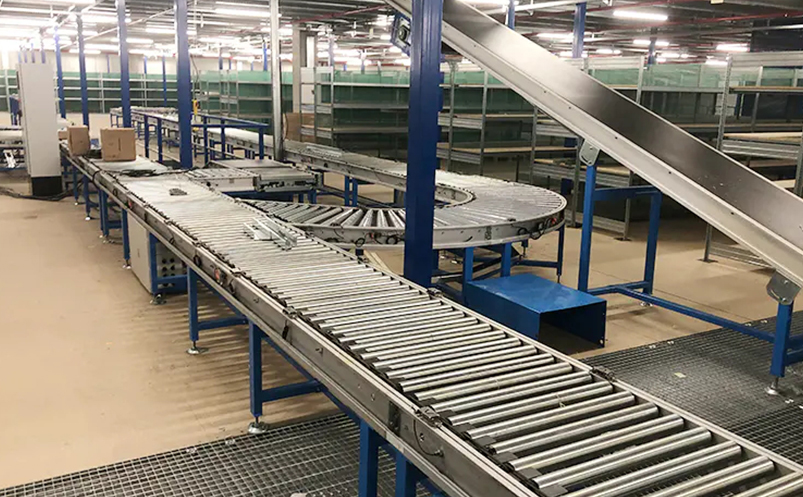
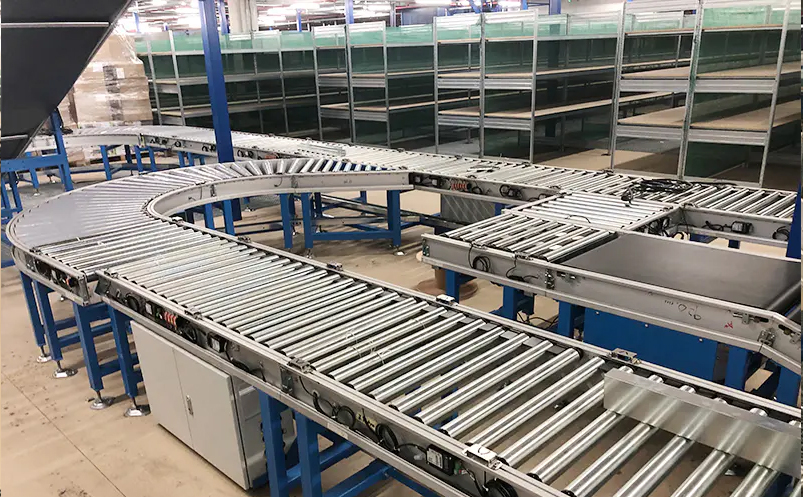
A standard chain driving roller conveyor consists of a series of rollers fitted with sprockets, linked together by a continuous roller chain looped around a drive unit. The motor reducer turns a drive sprocket, which engages the chain and rotates the first roller. From there, each subsequent roller’s sprocket catches the same chain, propagating motion down the entire bed.
Single-Strand and Multiple-Strand Configurations
- Single-strand chain drives connect rollers in a straight line and suit moderate widths up to 1,200 millimeters.
- Multiple-strand setups use two or more parallel chains to drive wide roller sections, evenly distributing torque for pallet loads exceeding 2,500 millimeters across.
The chain path often runs beneath a guarding plate or inside a sealed lubrication channel to contain oil and shield the chain from debris. This layout allows operators to replace individual rollers without dismantling the entire drive line, a significant advantage during unplanned downtime.
Key Design Considerations for Load and Speed
Selecting the right chain drive begins with the true load profile. Engineers must calculate both the static weight per pallet and the dynamic forces generated during acceleration. A miscalculation here leads to premature chain elongation or roller bearing failure.
Chain Pitch and Roller Sprocket Alignment
For heavy pallet systems, a chain pitch of 12.7 millimeters to 25.4 millimeters offers the best balance between tooth strength and smooth engagement. Smaller pitches reduce chordal action and vibration at speeds above 20 meters per minute. Sprocket tooth count must never drop below 17 teeth to avoid excessive pulsation that can shake loose product.
Temperature and Environment Limits
Standard carbon steel chain operates between -10°C and 150°C. When the line must survive oven exits or freezer tunnels, specify stainless steel or nickel-plated chain with high-temperature lubricants, pushing the safe operating window to -30°C to 230°C. For washdown areas, corrosion-resistant duplex chains with sealed bearings prevent seizure and extend service intervals.
Comparing Chain Drive to Other Conveyor Drive Mechanisms
No single drive technology fits every application. The following table captures the practical differences that influence selection on the plant floor.
| Feature | Chain Drive | Belt Drive | Line Shaft | Motorized Roller |
|---|---|---|---|---|
| Slip possibility | None | Moderate to high | Low | None |
| Max practical load per zone | Over 10,000 kg | 2,000 kg | 4,500 kg | 1,800 kg |
| Oil and dirt tolerance | Excellent | Poor | Fair | Good with sealed units |
| Typical roller pitch range | 75 – 250 mm | 50 – 150 mm | 75 – 200 mm | 60 – 150 mm |
The data highlights that chain drive remains the undisputed leader where zero slip and extreme load durability are non-negotiable. Motorized rollers gain ground in clean, lightweight e-commerce settings, but they cannot match the brute force transfer of a well-maintained chain loop.
Maintenance Best Practices to Maximize Service Life
Proactive maintenance directly correlates with chain conveyor uptime. A structured routine turns a potential wear point into a predictable, budgeted consumable.
- Inspect chain elongation with a gauge every 250 operating hours. A stretch beyond 3 percent of original length signals the need for immediate replacement to protect sprocket teeth.
- Lubricate with an extreme-pressure synthetic oil every 160 hours in dry environments and every 80 hours in dusty or wet conditions. Automatic drip lubrication systems reduce manual intervention.
- Check roller rotation by hand during shift changes. A roller that resists turning likely indicates a seized bearing, which will overload adjacent chain links and accelerate wear across the entire section.
- Keep sprocket alignment within a ±0.5 millimeter tolerance along the entire conveyor length. Misalignment concentrates side wear on chain link plates and can snap a link under shock load.
- Record chain tension weekly. A correctly tensioned chain exhibits about 2 percent sag between support guides. Over-tensioning stresses motor bearings; under-tensioning invites jumping and jamming.
Facilities following these steps commonly report chain service intervals of 12,000 to 15,000 operating hours before a full replacement becomes necessary, even in foundry casting lines where abrasive sand is pervasive.
Industry Applications Where chain driving roller conveyors Excel
The ability to combine heavy load handling with harsh environment resilience positions chain driving roller conveyors in several demanding sectors.
Steel and Primary Metal Processing
Hot slab conveyors using heat-treated chains move steel blooms at temperatures exceeding 800°C directly from continuous casting exits to rolling mills. The positive drive prevents slippage that could misalign product and cause a cobble.
Automotive Assembly Sub-Lines
Engine marriage stations rely on chain driven roller beds to support a pallet weight often surpassing 2,500 kilograms. The precise indexing capability, controlled by sprocket tooth count and inverter drive synchronization, positions engine blocks within ±1 millimeter of the lifting tool.
Lumber and Panel Handling
Sawmills run chain conveyors covered in bark dust and sap. The open chain design resists buildup, while the robust links tolerate the impact of falling trimmed logs weighing over 4,000 kilograms without deforming.
Container and Pallet Live Storage
In freezer warehouses operating at -25°C, chain drives with low-temperature lubrication maintain consistent speed on decline gradients without the tension loss that plagues rubber belts, enabling 95 percent order picking accuracy on first-in-first-out flow racks.
Direct Answer: Why Chain Drive Is the Right Investment
chain driving roller conveyors command their premium because they eliminate slip, withstand extreme abuse, and simplify load distribution across wide beds. The data is clear: zero slip under peak torque, load limits that dwarf belt and line shaft alternatives, and service lives reaching 15,000 hours when lubricated correctly. For any facility moving heavy, hot, or abrasive products where an unplanned stop costs thousands per minute, the chain drive conveyor is not just an option; it is the engineer’s default specification.