

 ENG
ENG 中文简体
中文简体 русский
 Français
 Español
 日本語
日本語 عربى
عربىContent
Two Ways to Drive a Roller Conveyor
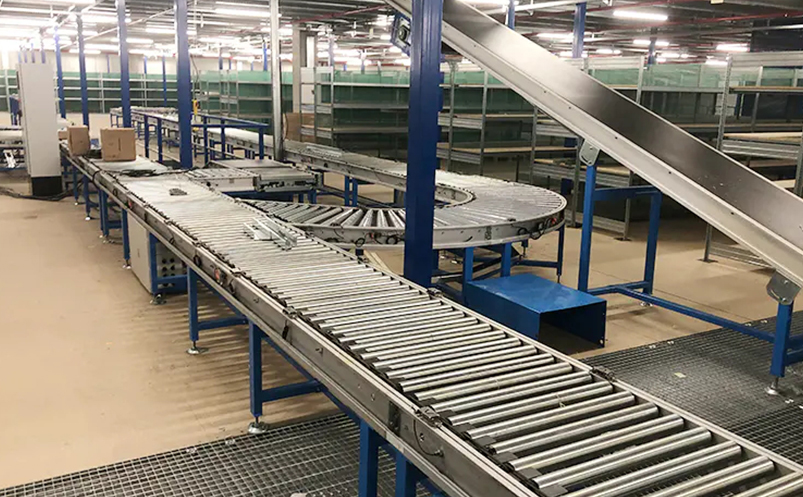
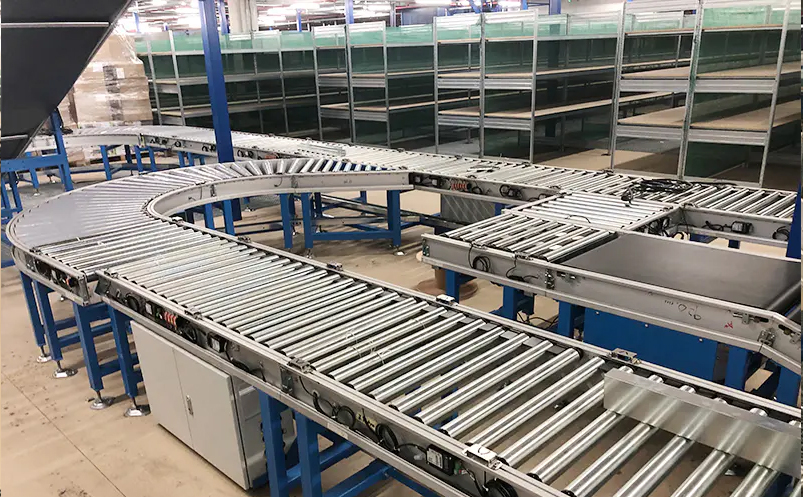
A roller conveyor moves product one of two ways: an external motor pushes power through a chain, sprocket, or belt to a line of rollers, or a small motor sits inside a single roller tube and drives that section on its own. The first approach is the backbone of most chain-driven roller conveyors built for heavy pallet loads, where a single gear motor turns a shaft that pulls dozens of rollers in sequence through roller chain or timing belts. The second, known as a motorized roller or MDR, replaces that entire chain of components with a sealed motor and gearbox built into the roller shell itself.
Neither design is new. Geared motor drives have moved pallets and cartons since the earliest standard roller conveyor structures built for continuous duty went into service, and they remain the default choice wherever loads are heavy and the line runs at one steady speed. Motorized rollers came later, built specifically for sections that need to start, stop, and idle independently rather than move as one continuous chain of components.
That structural difference decides how much energy actually reaches the product versus how much is lost getting there.
Where the Energy Loss Actually Happens
Every mechanical link in a drive train bleeds a little power as heat and friction. A gear motor turns a shaft, the shaft turns a chain, the chain turns a dozen sprockets — each step gives away a percentage point or two before power ever reaches the load. A poorly tensioned chain or a dry bearing pushes those losses higher, which is one reason heavy chain-driven lines need scheduled lubrication just to hold their rated efficiency.
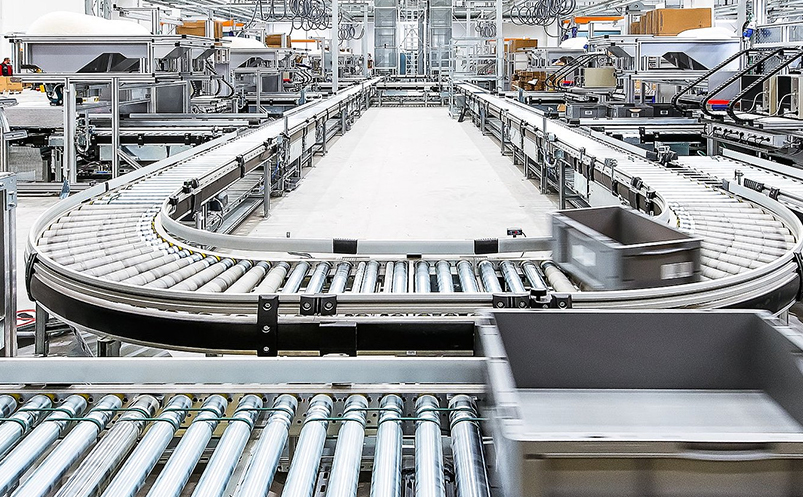
Motorized rollers cut most of that chain out. Poly-V belts linking adjacent rollers run at roughly 97% transmission efficiency, and because the motor sits inside the roller itself, there's no separate gearbox-to-shaft-to-chain path losing energy at each junction.
The bigger savings come from how the system behaves when there's no product on it. A conventional gear motor typically runs for the length of a shift, turning every roller whether or not anything sits on top of them. Zero-pressure accumulating roller conveyors that start and stop by zone flip that logic: each section's motor engages only when a sensor detects product entering it. That's the mechanism behind the 30–70% energy reduction figures reported across multi-zone MDR installations — the motors aren't more efficient individually, most of them are simply switched off most of the time.
When Geared Motor Drive Still Makes Sense
None of this makes geared drive obsolete. Motorized rollers are built around compact, low-torque motors, so they lose their advantage once loads climb past the range typical of cartons and totes. Pallet lines and other heavy-load chain driving roller conveyors for continuous, high-tonnage transport routinely move loads that would need an oversized, expensive array of motorized rollers to replicate — one central gear motor sized for the job is simpler and cheaper.
Continuous, single-speed operation is the other case where geared drive holds up well. A line that runs at one speed for an entire shift, like a standard type belt conveyor built for continuous bulk transport, doesn't benefit from zone-by-zone start-stop logic because there's no idle time to eliminate. Here, the geared motor's higher per-unit power draw is offset by needing far fewer motors overall.
Weighing Total Cost, Not Just kWh
Energy consumption is only part of the calculation. Motorized rollers typically cost more per unit upfront, but they cut installation time since there's no chain alignment or belt tensioning to set, and maintenance shrinks to occasional roller swaps rather than routine chain lubrication and sprocket replacement.
Geared motor systems stay cheaper to install at scale and easier for a maintenance team already trained on mechanical drive trains — particularly on double speed chain conveyors built for mixed-speed production lines, where shifting an entire line's speed in one step matters more than per-zone control.
The right call depends less on a single efficiency percentage and more on how the line actually runs: load size, run pattern, and how much unplanned downtime the operation can absorb. A facility moving parcels through a busy sortation area usually has the idle time to make motorized rollers pay off quickly. A line moving one weight at one speed for eight hours straight often gets more value from a well-maintained gear motor doing the same job it has for decades.