

 ENG
 中文简体
 русский
 Français
 Español
 日本語
 عربى
Content
What a Wheel Conveyor Actually Does
A wheel conveyor moves flat-bottomed loads on small free-spinning wheels set into a frame, so one person can push cartons, totes, or trays with far less effort than a solid surface allows.
Wheel conveyors are not a substitute for every roller line. They are a focused tool for flat-bottom loads that people push by hand or transfer across short distances. The wheels sit on closely spaced axles, usually in a galvanized steel, painted steel, or stainless frame, and the load rolls across the top. Because only the wheel crown touches the product, friction is low and cartons keep their shape better than they do on a solid transfer table.
Two numbers drive the specification more than anything else: load weight per wheel and wheel pitch. If the pitch is too wide for a small carton, the carton will sag between wheels. If the wheel is too light for a heavy tote, the bearing will fail early. Use the load footprint to set pitch, then confirm the frame and supports can carry the total.
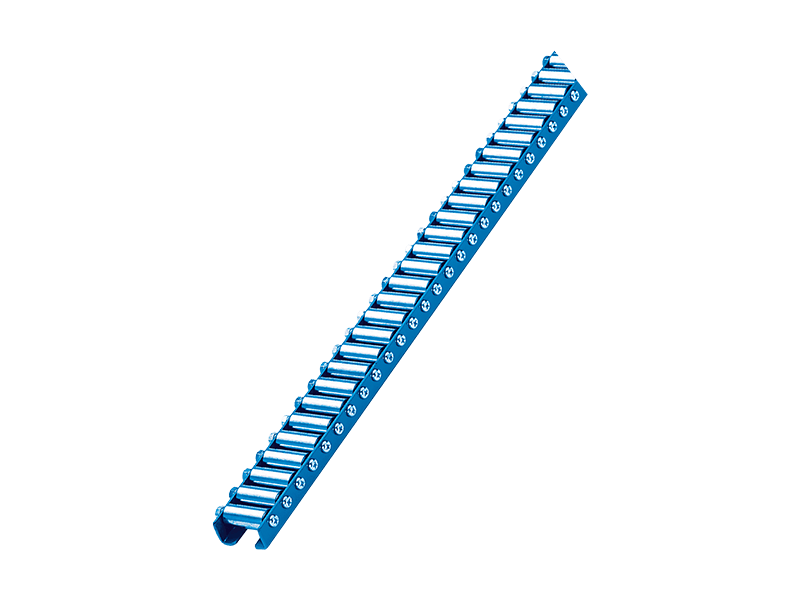 Wheel Conveyor Models for Load and Pitch SelectionBrowse wheel conveyor models by wheel loading and pitch to match cartons, totes, and frame capacity before choosing gravity or powered transfer.View Product →
Gravity or Powered: Match the Drive to the Workflow
Gravity wheel conveyors suit short, level-to-slight-decline transfers and manual picking; powered conveyors are the better choice when loads must stop, accumulate, or move uphill.
Gravity wheel conveyors rely on a small decline, usually a few degrees, to keep loads moving. They are cheap to run, easy to clean, and well suited to packing tables and short transfer runs. The catch is control: a gravity wheel bed cannot hold a load on its own unless the line is level or has a stop.
Powered layouts use motor rollers, belt drives, or chain drives to move loads. They cost more and need controls, but they can handle accumulation, incline, and heavier loads. For wheel conveyor work, most powered requests are better served by a motor roller conveyor or a driven roller conveyor, because the wheel bed is primarily a gravity surface.
Gravity wheel conveyor
- Lower capital cost and no control panel
- Best for manual push and short runs
- Needs slope, brake, or operator control
- Simple cleaning and low spare-part count
Powered alternative
- Moves loads uphill or over longer runs
- Can zone and accumulate with controls
- Higher electrical and maintenance scope
- Better for heavy or repetitive flow
For a closer look at load behavior, see how wheel conveyors handle heavy versus light loads.
Wheel Types, Frames, and Load Ratings
Wheel material and frame gauge decide whether a wheel conveyor handles light cartons, heavy totes, or wash-down areas without marking the product.
A general-purpose steel wheel is the default for cartons, totes, and rigid trays. Stainless wheels and frames move into food, pharmaceutical, and wash-down areas where corrosion control matters. Resin and rubber wheels reduce marking and noise, but they need a closer check on load per wheel and operating temperature.
| Wheel type | Typical use | Watch point |
| Pressed steel wheel | General cartons, totes, rigid trays | Check zinc or powder coating in damp rooms |
| Cutting wheel | Longer cartons and mixed sizes | Confirm the wheel profile does not mark soft packaging |
| SUS wheel | Food, pharma, wash-down areas | Specify stainless frame and fasteners too |
| Resin wheel | Light cartons, electronics, fragile surfaces | Check load per wheel and temperature range |
| Rubber wheel | Sensitive products and quiet lines | Rubber can flat-spot if idle under heavy load |
| Universal ball | Changes of direction and turntable transfers | Keep debris out of the ball race |
Frame choice follows the same logic. A light galvanized frame is fine for cartons in a dry packing area. A heavier painted or stainless frame is safer when the line sees daily wash-down, heavy totes, or repeated impact from fork-truck loading.
Metal Fluent Wheel Conveyors for Custom Conveyor LinesCompare metal fluent wheel assemblies and frame material options for cartons and totes in packing, staging, and truck-loading layouts.View Product →Where Wheel Conveyors Fit in the Plant
Wheel conveyors fit best where loads are flat, stable, and moved short to medium distances, such as packing benches, staging lanes, and truck loading.
The strongest applications are not long transport runs. They are the short movements around people, where a powered conveyor would add controls and guarding for little gain. Wheel conveyors also help when a line needs to be extended, shortened, or moved without a major electrical change.
- Packing and dispatch: slide cartons from the sealing table to the pallet or van.
- Order picking: move totes along a pick face and into a consolidation lane.
- Work-in-process: connect machines or benches where loads are flat and rigid.
- Truck loading: reduce manual carry distance at the trailer door.
- Temporary or seasonal lines: add low-cost capacity without fixed drives.
Light cartons and printed packaging often call for resin or rubber wheels, not exposed steel. That is a small change in the specification but a large difference in product damage and noise at the packing bench.
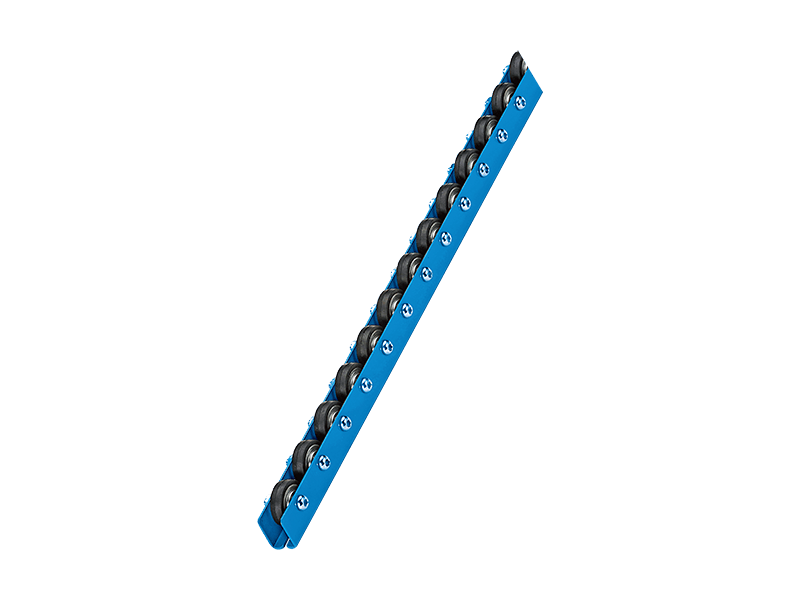 Rubber and Resin Fluent Wheel Conveyor ModelsSelect rubber- or resin-coated wheel conveyor models for light cartons and printed packaging where reduced product damage and noise matter.View Product →
Specification Checklist Before You Order
A wheel conveyor order should be built around the load first, then the frame, pitch, supports, and controls.
Start with the load, then the frame, then the controls. A wheel conveyor that is sized from the frame length backwards will usually end up with the wrong pitch or too few supports.
- Measure the load footprint. Record length, width, weight, and centre of gravity. A small footprint concentrates load on fewer wheels.
- Calculate load per wheel. Divide the load by the number of wheels under it, then add a margin for dynamic and uneven loading.
- Choose wheel material. Steel for general industrial use, stainless for wash-down, resin or rubber for light or sensitive products.
- Set wheel pitch and frame width. Pitch must be tight enough that the load does not sag; frame width should give a small clearance on each side.
- Confirm supports, guards, and stops. Check leg spacing, floor anchors, side guides, and end stops before the layout is released.
Maintenance follows from the same design choices. Keep the wheel race clean, replace bent wheels early, and check that the frame has not been pushed out of line by impact. Most slow-running wheel conveyor complaints trace back to debris, corrosion, or a wheel that no longer spins freely.
Frequently Asked Questions
What is a wheel conveyor used for?
A wheel conveyor is used for short, flat-bottom transfers such as packing benches, order-picking lanes, staging areas, and truck loading. It works best when one person needs to push a carton or tote with low effort.
Can wheel conveyors handle heavy loads?
They can, but the limit is load per wheel and frame stiffness, not the line length. Heavy totes need a tighter wheel pitch, stronger axles, and more supports. Above a certain weight, a driven roller conveyor is usually the more reliable choice.
What is the difference between a wheel conveyor and a roller conveyor?
A wheel conveyor uses small free-spinning wheels and is mainly a gravity surface for flat loads. A roller conveyor uses full-width rollers and can be gravity or driven, with better support for heavy, long, or accumulation-heavy loads.
How do you maintain a wheel conveyor?
Inspect wheels for debris, flat spots, and free rotation; check frame alignment; and replace damaged wheels before they mark products. In wash-down areas, confirm that stainless wheels and fasteners are used together.