

 ENG
 中文简体
 русский
 Français
 Español
 日本語
 عربى
Content
- 1 What a wheel conveyor actually is
- 2 Gravity wheel or powered roller: the decision rule
- 3 Wheel type and wheel material decide the behaviour
- 4 Layout rules that decide whether the line runs
- 5 Maintenance and troubleshooting in practice
- 6 Specification checklist before you request a quote
- 7 Common questions about wheel conveyors
A skate wheel line moving a 20 kg carton down a 3 percent slope needs no motor, no cable and no control panel: gravity does the work. That single fact explains why wheel conveyors still hold their place in picking zones, pack benches and trailer-loading docks long after a warehouse has moved to powered roller.
Most wheel conveyor problems are not wheel problems. When a lane stalls, jams at a transfer or marks a printed carton, the cause is almost always pitch, decline angle, transition detail or wheel material. All four are cheap to settle on a drawing and expensive to correct once the frames are bolted to the floor.
What a wheel conveyor actually is
A wheel conveyor is an unpowered conveyor whose load surface is a row of small free-spinning wheels on axles between two side frames, and it moves loads by gravity, by hand push or by a slight decline rather than by pulling them.
Definition: a wheel conveyor, also called a skate wheel conveyor or gravity wheel conveyor, carries flat-bottomed loads across closely spaced free-turning wheels. Each wheel spins independently, so the load rolls instead of sliding, which is why one section can handle a carton, a plastic tote and a steel tray without changeover.
Because every wheel turns on its own axle, friction between the load and the surface stays low and only the base of the product matters. A rigid, smooth bottom rolls well; a soft bag, a mesh pallet or a load resting on protruding pallet feet will drag, tip or drop between wheels.
Numbers you will usually see in a wheel conveyor quotation:
- Wheel diameter of 48 mm as the common default, with 38 mm and 50 mm variants
- Axle pitch of 75 mm, 100 mm or 125 mm, chosen against the smallest load footprint
- Frame widths from roughly 200 mm to 1000 mm in galvanised steel, stainless steel or aluminium
- Static load per wheel of about 15 to 25 kg, so the lane rating depends on how many wheels share the load
- Gravity decline of 2 to 5 percent, with the higher end used in cold stores and dusty plants
Exact figures vary between builders and should be confirmed against a datasheet, but the relationships hold. The smallest footprint on the line sets the pitch, and the pitch plus wheel count sets the real capacity. Which products suit this surface is covered in the guide to materials that can be transported on a wheel conveyor, and it is worth reading before the frame width is frozen.
Gravity wheel or powered roller: the decision rule
If the load is flat-bottomed, weighs under roughly 50 kg per item and can travel downhill, a gravity wheel conveyor is usually the cheapest way to move it, often at a small fraction of the capital cost of a powered roller line.
Gravity wheel line
- No motor, no panel, no wiring
- Installed in hours and re-laid when the layout changes
- Almost no running cost or energy draw
- Needs 2 to 5 percent of fall across the route
- Single-file flow with no accumulation logic
Powered roller line
- Handles pallets and loads from 100 kg upward
- Zones, sensors and PLC handoff for buffering
- Runs level or uphill at a set speed
- Higher capital cost, plus guarding and maintenance
- Needs power, controls and trained support
The middle ground is common: a powered roller section climbs from the mezzanine and drops onto a gravity wheel takeaway that carries the carton the last few metres to a pack bench or trailer door. The expensive hardware handles the climb, the cheap hardware handles the end of the run.
| What matters | Wheel conveyor | Roller conveyor | Belt conveyor |
| Drive | Gravity or hand push | Gravity or motorised | Motorised |
| Typical item load | Up to roughly 50 kg | Roughly 20 to 1500 kg | Any, including bulk |
| Load base | Rigid and flat | Flat or on runners | Not required |
| Accumulation | Loads touch in line | Low-pressure zones | Limited |
| Best fit | Picking, packing, trailer loading | Pallets and heavy totes | Loose or irregular items |
Wheel type and wheel material decide the behaviour
Wheel material affects friction, noise and product marking more than the frame does, so it should be chosen from the load rather than from the price list.
- Metal press wheels: stamped steel housings, the default for cartons and totes, lowest cost per metre and the most tolerant of rough handling
- Cutting wheels and stainless wheels: for washdown, food and wet areas where a plated frame would corrode
- Resin and rubber wheels: for printed cartons, glass and small plastic parts, at the cost of slightly higher rolling resistance
- Universal ball units: omnidirectional transfer points and turntables where the load has to change direction
A stamped steel press wheel is the workhorse of general cartoning: it survives being hit by a dropped tote and the housing protects the axle from tape and grit. For most distribution centre lanes this is the right starting point.
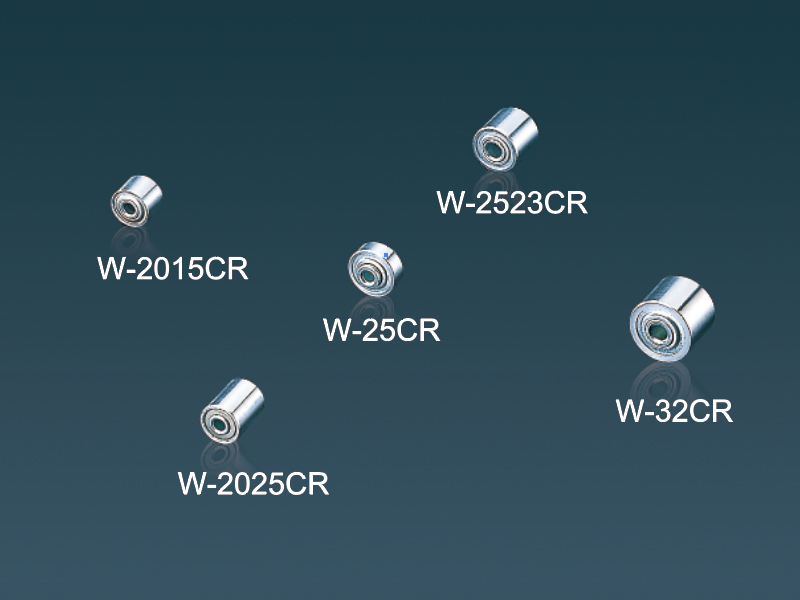 Custom Stamped Steel Press Wheel ConveyorStamped-steel press wheel conveyor for general cartoning and distribution lanes, offered with model load ratings plus sealed, dust- and moisture-resistant options for demanding environments.View Product →
Rubber and resin wheels slow the load a little and absorb impact, which is why they are specified for painted parts, printed packaging and quiet packing rooms. The trade-off is practical: expect to add one percent of fall, or to reduce the pitch, to keep light items moving.
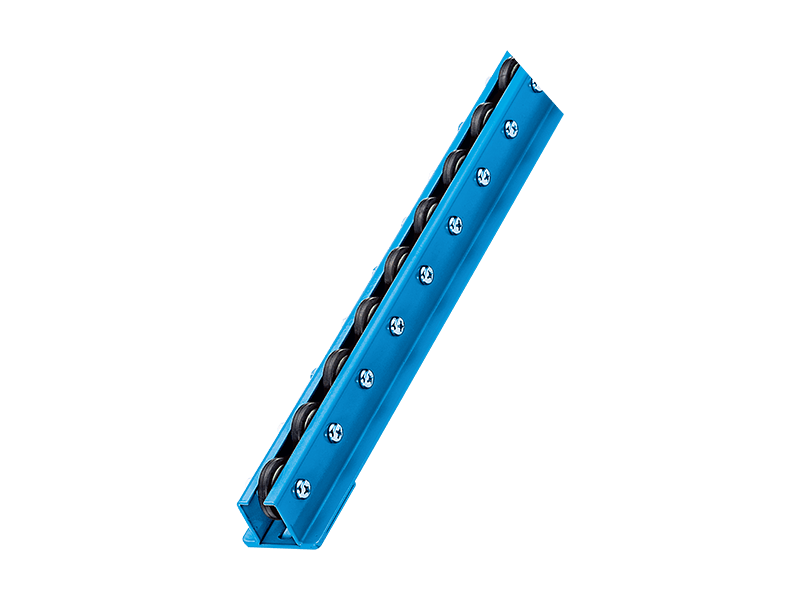 Rubber Wheel Conveyor Series for Fragile and Quiet HandlingBrowse rubber wheel conveyor models for fragile, painted, or quiet packaging flows, with shock-absorbing wheels and customizable pitch, frame, and load specifications.View Product →
Layout rules that decide whether the line runs
Pitch, decline, transitions and side guidance determine performance far more than the wheels themselves, and every one of them can be checked on a drawing before anything is fabricated.
- Set the pitch from the smallest load. 75 mm axles suit cartons above roughly 200 mm on the base side, 100 mm handles mixed totes, and 125 mm is for long rigid trays and heavier units.
- Set the fall from the environment. 2 to 3 percent works on clean indoor lines, while 4 to 5 percent is used in cold stores, dusty plants and wherever loads run heavy.
- Detail the transitions. Where a powered roller section hands over to gravity wheel, a short decline break or a transfer plate stops the leading edge of a carton from nose-diving into the first axle.
- Guide the load. Guard rails 50 to 75 mm above the wheel surface keep the centre of gravity inside the frame, and an end stop protects both the product and whatever sits at the end of the run.
A crate that stalls on a flat run is not too heavy for the wheels. It is usually too light for the angle, sitting on a base too soft to roll, or fighting a rail that was set too tight.
Maintenance and troubleshooting in practice
A wheel conveyor needs very little maintenance, and what it does need is dominated by contamination and impact damage rather than wear.
- Inspect axles after any dropped load, because a single bent axle makes one wheel drag and skews the whole lane
- Clear dust, tape and shrink-wrap from the wheel housings in food, cold-store and parcel lines
- Check galvanised frames for white rust in washdown areas, and specify stainless where hygiene is audited
- Re-check end stops and guard rails after every layout change, since a rail moved 20 mm can jam a lane
One seized wheel in a hundred is enough. It adds drag to every load that crosses it, marks printed cartons, and on a long gravity run is often the real reason a line that used to flow now needs a push.
Specification checklist before you request a quote
Six numbers decide both the price and the performance of a wheel conveyor line, and a supplier can quote accurately from them in a single exchange.
- Load weight and the footprint of the base, not just the overall carton size
- Base type: rigid board, plastic tote, steel tray, or something soft that needs a different surface
- Throughput in units per minute, and whether loads must queue without touching
- Route length and the total fall available between the start and the end point
- Environment: washdown, cold store, dust, or an area needing explosion-protected equipment
- Interface points with existing powered lines, workstations and packing benches
For standard frames and wheel options, the wheel conveyor range lists galvanised and stainless construction with replaceable wheels, which matters when one wheel fails and the alternative is swapping a whole section.
Where the route turns a corner or crosses an aisle, a short run of universal ball units replaces a curve and lets operators spin a tote on the spot instead of walking it around.
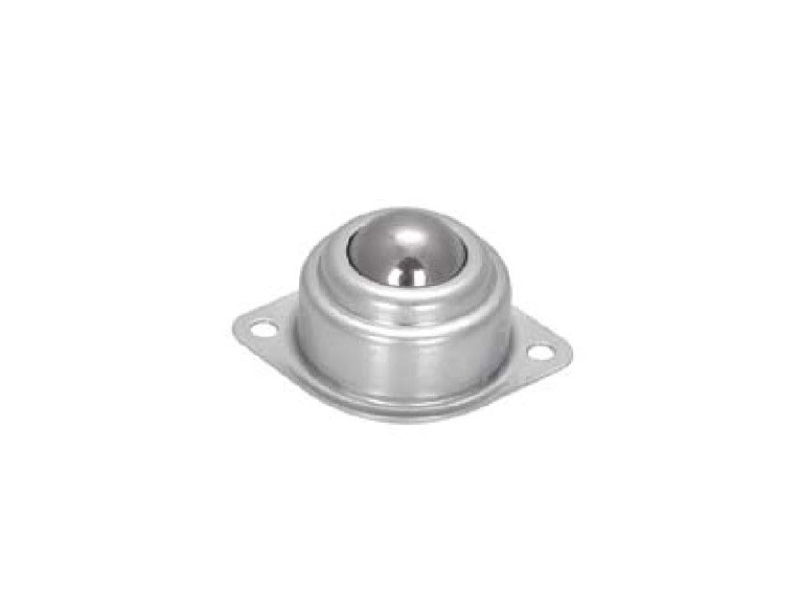 Universal Ball Conveyor Units for Corners and TransfersUse universal ball units at corners or aisle crossings to rotate totes in place; the category covers pressed-metal, machined-steel, air-cargo, and ball-downward series.View Product →
Common questions about wheel conveyors
How much weight can a wheel conveyor carry?
A single 48 mm wheel typically carries 15 to 25 kg, so lane capacity depends on how many wheels sit under the load rather than on one wheel figure. A 600 mm rigid tray at a 100 mm pitch rests on six axles across two rails, yet most builders still cap gravity wheel lines well below that arithmetic total because loading impact and uneven weight distribution reduce the safe working figure.
Can a wheel conveyor be powered or run uphill?
No. Wheel conveyors are never driven, so they need a falling gradient or a person. Level accumulation, uphill movement and heavy loads belong to powered roller or belt conveyors, and the usual compromise is a powered section feeding a gravity wheel run at the end.
What decline angle should a gravity wheel line have?
Two to three percent on clean indoor lines, four to five percent in cold stores and dusty plants or where loads are heavy. Steeper than about six percent and light cartons accelerate enough to damage product and end stops.
Do wheel conveyors damage fragile products?
With the right wheels, usually not. Resin or rubber wheels and a closer pitch protect printed cartons and small plastic parts. The real risk sits at transitions and end stops, where impact energy matters far more than the wheel surface itself.