

 ENG
 中文简体
 русский
 Français
 Español
 日本語
 عربى
Content
- 1 What Makes a Roller Conveyor Stainless, and Which Grade to Specify
- 2 Roller Diameter, Pitch and Load: The Numbers That Fix the Layout
- 3 Gravity, O-Belt, Chain or Motorised Roller: Which Drive Fits
- 4 Where Stainless Earns Its Premium, and Where It Does Not
- 5 Specification, Installation and Maintenance Checklist
- 6 Frequently Asked Questions
What Makes a Roller Conveyor Stainless, and Which Grade to Specify
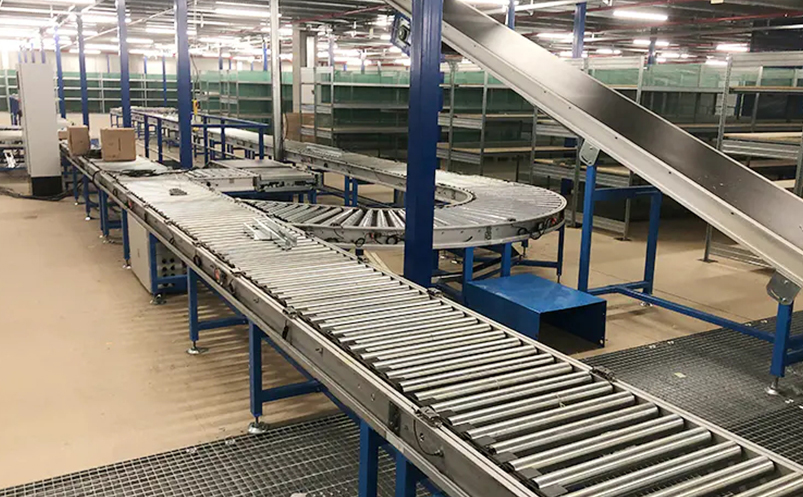
A stainless steel roller conveyor is a roller bed, gravity or powered, in which the rollers and normally the frame are made from stainless steel so the whole surface can be washed, disinfected or exposed to moisture without corroding.
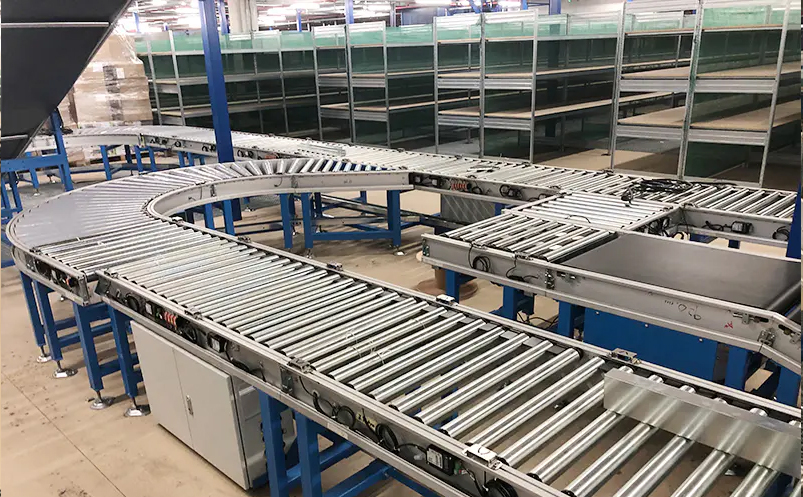
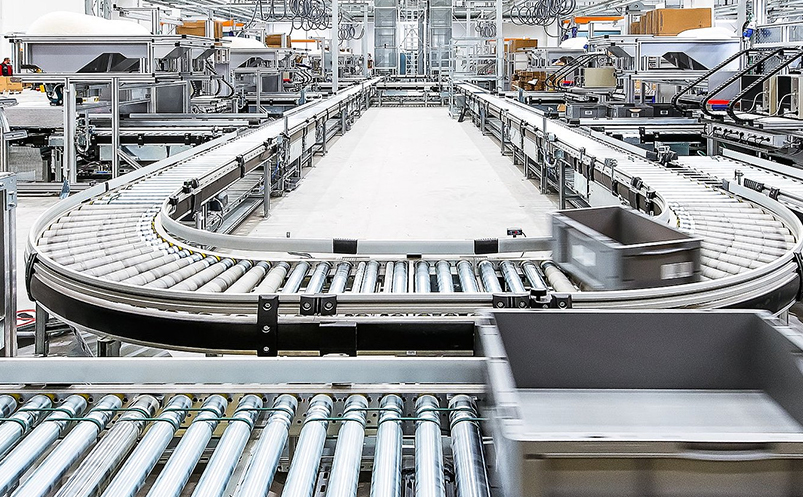
The roller itself is a tube, usually with a 1.2 mm to 2 mm wall, fitted with bearings, an axle and end caps. On a gravity line those tubes sit in a side channel at a fixed pitch and the frame is set at a slight decline; on a powered line an O-belt, a chain loop or a motorised roller takes over the movement. Everything that is not the tube still has to survive the same wash water.
| Grade | Corrosion behaviour | Typical conveyor use | Relative tube cost |
| 304 / 1.4301 | Good with fresh water, food residue and mild detergent; stains once chlorides are present | Bakery, beverage, general food packaging and wash-down areas | Baseline |
| 316L / 1.4404 | Molybdenum addition resists brine, chlorides and hypochlorite cleaning | Seafood, meat, chemical plants, coastal sites | Plus 25 to 40 percent |
| 430 / 1.4016 | Ferritic and magnetic; adequate only in dry, indoor conditions | Dry storage, guards, areas without wash-down | Minus 10 to 15 percent |
| 2205 duplex | High strength with strong chloride resistance | Heavy pallets, marine air, aggressive clean-in-place | Plus 60 to 90 percent |
Grade is only half of the decision. The features that fail first on a wash-down line are the ones the quotation usually leaves out:
- Bearing seals: specify two-sided sealed bearings in stainless or polymer housings, because open bearings pull wash water straight into the raceway.
- Axle material: stainless or polymer, never zinc-plated steel hidden inside the tube where nobody inspects it.
- Weld and crevice control: continuous welds, ground and passivated, since overlaps hold residue and start pitting.
- Isolation: nylon washers wherever stainless parts meet a carbon steel structure, to stop galvanic attack.
Roller Diameter, Pitch and Load: The Numbers That Fix the Layout
Roller diameter follows the weight and rigidity of the load, while roller pitch follows the smallest footprint the line will ever carry.
Keep at least three rollers under the shortest item at any moment, and four if the load is unstable or top-heavy. A 300 mm carton therefore needs a pitch of 100 mm or less. Wider pitch is cheaper and rolls more freely, but a box that bridges two rollers will nose-dive at every transfer point on the line.
Reading Load Capacity per Roller
Gravity lines in stainless usually run a 2 to 4 percent decline with steel or rigid plastic totes, and 4 to 6 percent with light trays that drag. Too flat and product stalls mid-span; too steep and every box hits the end stop hard enough to dent its leading edge. Specify legs with at least 30 mm of adjustment so the slope can be tuned after installation.
 Stainless Steel Roller Conveyor ModelsReview stainless steel roller conveyor models and widths for food, pharmaceutical and chemical lines where gravity flow needs durable, customizable frames and adjustable slope.View Product →
Gravity, O-Belt, Chain or Motorised Roller: Which Drive Fits
Choose gravity when product only has to travel downhill and nobody needs to hold it, and choose a driven roller bed when you need set speed, accumulation, inclines or controlled transfers.
- Lowest cost per metre: no motor, no controls, no guarding
- Throughput limited only by the decline and the operator
- No accumulation control, so queued product touches
- Set speed and controlled transfers between lines and levels
- Works on the flat, on inclines and through sorters
- Needs power, controls and drive maintenance
Drive Types Compared
| Drive type | How power reaches the roller | Best fit | Accumulation |
| O-belt | Round polycord running in grooves under the rollers | Light to medium cartons on straight runs | Limited |
| Chain drive | Sprockets on each roller linked by a chain loop | Heavy loads, long lines, harsh wash-down | Yes, with zones and sensors |
| Motorised roller | Motor and gearbox built into the tube | Zoned lines, quiet rooms, retrofits | Yes, zone by zone |
| Poly-V belt | Flat belt pressed against the roller underside | High speed with light, stable products | Limited |
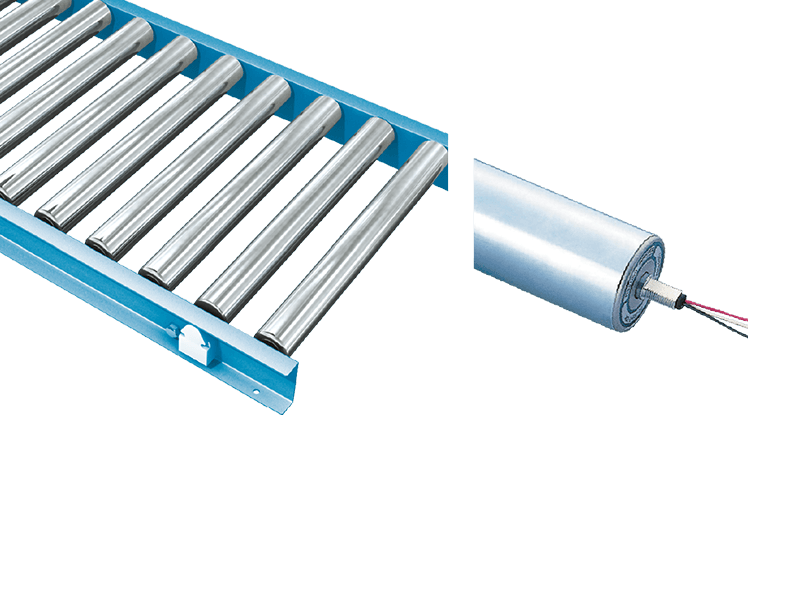 Electric Motor Roller Conveyors for Compact LinesCompare AC and DC motor roller conveyors for packaging and assembly lines where compact, powered beds need easy installation and controlled speed.View Product →
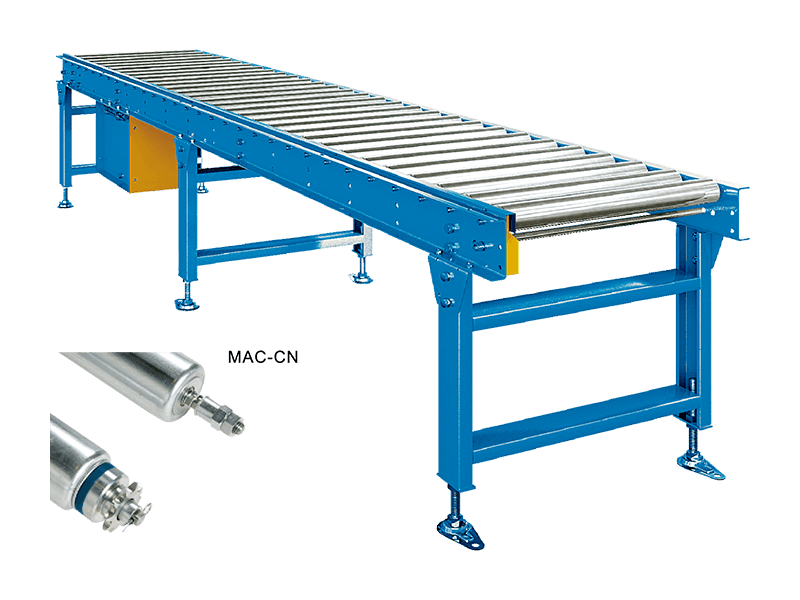 Accumulating Roller Conveyors for Buffered FlowView accumulating roller conveyor options that transport and temporarily store goods, helping adjust spacing or speed in motor-driven or roller-driven handling lines.View Product →
Where Stainless Earns Its Premium, and Where It Does Not
Stainless pays wherever the line is washed, disinfected or exposed to salt, brine or aggressive cleaning chemicals, and it rarely pays in dry distribution centres where painted steel or aluminium runs for years.
Equally, there are purchases where stainless is simply the wrong material:
- Dry ambient warehouses with no wash-down, where painted steel delivers the same service life for less money.
- Very heavy pallet loads, where structural carbon steel sections are stiffer per unit of cost and stainless is used only at contact points.
- Short-term or seasonal lines, because standard aluminium frames are easier to resell once the season ends.
Specification, Installation and Maintenance Checklist
A stainless line stays clean and serviceable when five details are closed before the order is placed: chemistry, geometry, drive, drainage and access.
Five Steps From Enquiry to Order
Rollers that begin to drag are usually losing a bearing rather than a tube, so replace the whole roller instead of rebuilding it in place. Lubrication is a small and specific job on these lines; the approved practice for food-grade and wash-down environments is covered in how rollers are lubricated or maintained in stainless steel. Before approving a sample, it is also worth reviewing the manufacturer's production and certification background, because wall thickness, weld finish and bearing housing material are what the service life actually depends on.
Frequently Asked Questions
Are stainless steel roller conveyors suitable for direct food contact?
They are suitable for food handling areas when rollers, frame and fixings are all stainless, bearings are sealed and welds are continuous and passivated. Direct product contact normally still calls for a food-grade belt or tray rather than bare rollers.
Is 304 or 316L the better choice for a wash-down line?
Choose 316L when the wash water, the product or the cleaning chemical carries chlorides, as in seafood, meat, brine and hypochlorite sanitisers. For bakery, dry goods and low-chloride detergent wash-down, 304 performs well and costs noticeably less.
What decline should a stainless gravity roller conveyor run at?
Most installations use 2 to 4 percent for steel or rigid plastic totes and 4 to 6 percent for light trays. The exact figure depends on product weight, roller friction and how the line ends, and adjustable feet let the slope be tuned on site.
Can a gravity stainless conveyor be upgraded to powered later?
Often yes, provided the frame was specified with future drive in mind: deeper side channels, room for an O-belt run or motorised rollers, and space for a control enclosure. Retrofitting a frame designed purely for gravity usually means replacing the roller bed rather than adding to it.