

 ENG
ENG 中文简体
中文简体 русский
 Français
 Español
 日本語
日本語 عربى
عربىContent
Why Standard Conveyors Struggle on the Assembly Line
A car body can weigh well over a thousand kilograms before a single component is installed, and an assembly line has to move that weight through dozens of stations without a single unplanned stop. Belt conveyors can slip under concentrated loads like this, and standard roller conveyors distribute weight across a narrower contact area than a body-in-white assembly can tolerate at speed.
The second problem is timing. Different stations along the line rarely share the same cycle time — a robotic welding cell might need ninety seconds per unit while a manual trim station needs sixty — and the conveyor has to accommodate that mismatch without creating a bottleneck. The third problem is environment: paint shops run hot, stamping areas generate metal debris, and both conditions degrade equipment that wasn't built to handle them. Chain conveyors built to move heavy unit loads down the line are the standard answer to all three constraints at once.
Positive Engagement Solves the Load Distribution Problem
A chain conveyor moves product through positive mechanical engagement rather than friction, meaning the chain physically pulls the load rather than relying on surface grip. That single difference removes the slippage risk that comes with belts under heavy, uneven loads, and it spreads weight across multiple contact points along the chain instead of concentrating it on one drive surface.
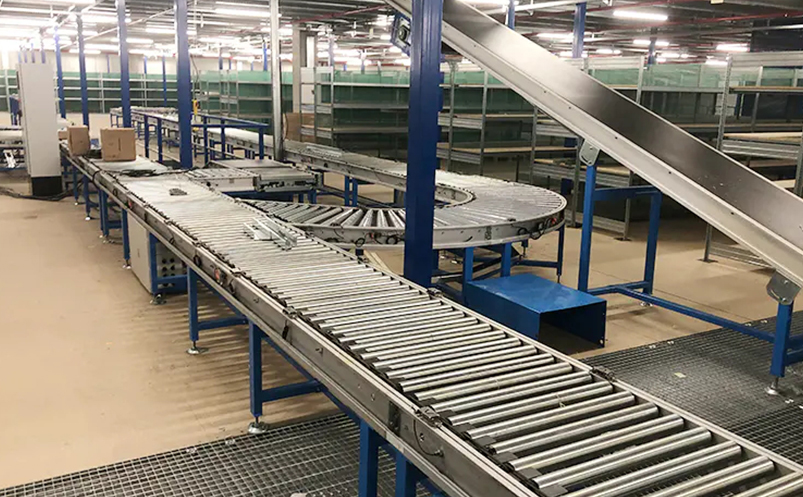
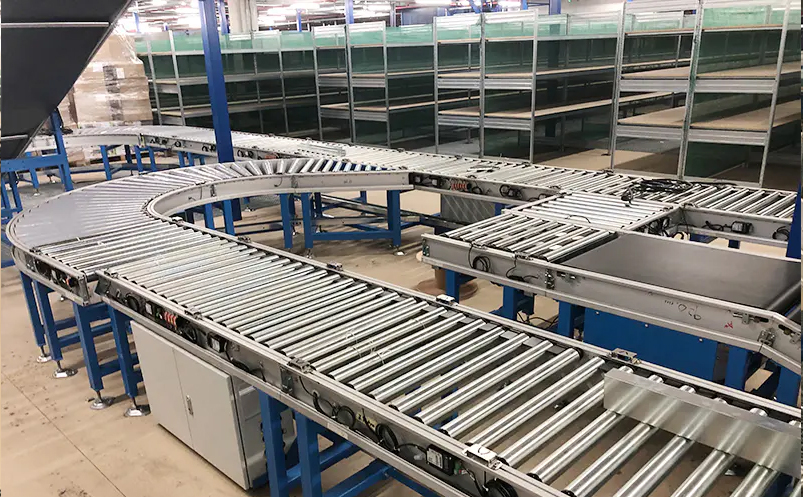
Heavy-load chain driving roller conveyors for high-tonnage components extend this principle to engine blocks, transmissions, and other dense parts that would overwhelm a lighter-duty system. Because chain-driven roller conveyors that transfer power through positive engagement keep every roller synchronized to the same drive chain, the load moves as one coordinated unit rather than depending on each roller spinning independently and consistently.
Matching Conveyor Speed to Station Cycle Time
Running an entire assembly line at the pace of its slowest station wastes capacity everywhere else on the floor. Running it at the pace of the fastest station overwhelms slower stations and creates work-in-process pileups. Double speed chain conveyors built to match varying station cycle times address this directly, letting a single line run two distinct speeds across different zones without splitting into separate conveyor systems.
This matters most at transition points — where a high-speed body transport section feeds into a slower manual inspection station, for instance. Rather than forcing a compromise speed across both zones, the line can accelerate or decelerate the product at the boundary, keeping each station working at its own optimal rate.
Standing Up to Paint Shops, Heat, and Debris
Paint shop conveyors operate in booth temperatures well above what a standard belt can tolerate for years without degrading, and the chemical exposure from primers and coatings accelerates wear on materials that aren't built for it. Stamping and welding areas add a different challenge: metal shavings and weld spatter that would jam a fine-tolerance mechanism or cut into a belt surface over time.
Slat (top) chain conveyors designed for harsh, high-contact environments handle these conditions by presenting a flat, replaceable surface over the chain mechanism, protecting the drive components from direct exposure to heat, debris, and repeated impact. When one section wears out, individual slats can be swapped without pulling the entire chain assembly, which keeps unplanned downtime short in an operation where every stopped minute has a direct cost.
Solving conveyance challenges on an automotive line rarely comes down to one piece of equipment. It comes down to matching each constraint — load, timing, environment — to a chain conveyor configuration built specifically for it.