

 ENG
 中文简体
 русский
 Français
 Español
 日本語
 عربى
Content
- 1 What a Metal Fluent Wheel Conveyor Actually Is
- 2 Where Gravity Wheel Lines Earn Their Place, and Where They Do Not
- 3 Pressed, Machined or Stainless: Choosing the Wheel
- 4 Pitch, Slope and Load: Three Numbers That Decide Whether It Works
- 5 Frame, Finish and the Room It Lives In
- 6 Specifying a Line: Five Steps That Avoid Rework
- 7 Maintenance That Actually Matters
- 8 Frequently Asked Questions
Twelve kilos per carton, six metres between the packing bench and the stretch wrapper, and no power drop within reach of the aisle. That is the brief that usually puts a metal fluent wheel conveyor on the drawing board: a gravity line built from steel wheels that costs a fraction of a powered roller run and needs nothing more than a steady fall to keep boxes moving.
The catch is that gravity wheel lines are unforgiving of small mistakes. Wheel pitch, frame stiffness and slope all interact, and a run that looks fine on paper can stop dead in a cold store or let a soft-bottomed bag sag between the wheels. What follows is the practical version of that specification conversation, covering the numbers, the trade-offs and the failure modes worth designing out before the first order is placed.
What a Metal Fluent Wheel Conveyor Actually Is
A metal fluent wheel conveyor is a gravity conveyor in which rows of small steel wheels, mounted on axles at a fixed pitch, sit slightly proud of a metal frame so that flat-bottomed loads roll along the line under their own weight.
A wheel conveyor belongs to the gravity conveyor family and is separated from a roller conveyor by using many small-diameter wheels per metre instead of a few large rollers. The metal variant uses steel wheels, either pressed, machined or stainless, rather than resin or rubber, and is specified when load weight, wear life or washdown rules out plastic.
There is no belt, no motor and no drive. The load carries its own momentum and the only energy input is the height difference between infeed and discharge. That simplicity is the entire appeal: fewer parts, no wiring, no control cabinet, and a line light enough to be lifted and repositioned when the layout changes.
- Frame rails in galvanized steel, powder-coated steel or stainless, with wheel axles staked or spring-clipped into the rail.
- Wheels running on plain or ball-bearing axles; bearing choice matters more than wheel diameter in dusty or wet rooms.
- Supports, side guides, end stops and transfer plates, which are normally quoted separately from the conveyor body.
Compared with a roller conveyor, the wheel version is lighter, cheaper per metre and easier to curve, but it is a carton-duty tool. Once loads pass roughly 50 kg or need to be accumulated and released, a driven roller line takes over.
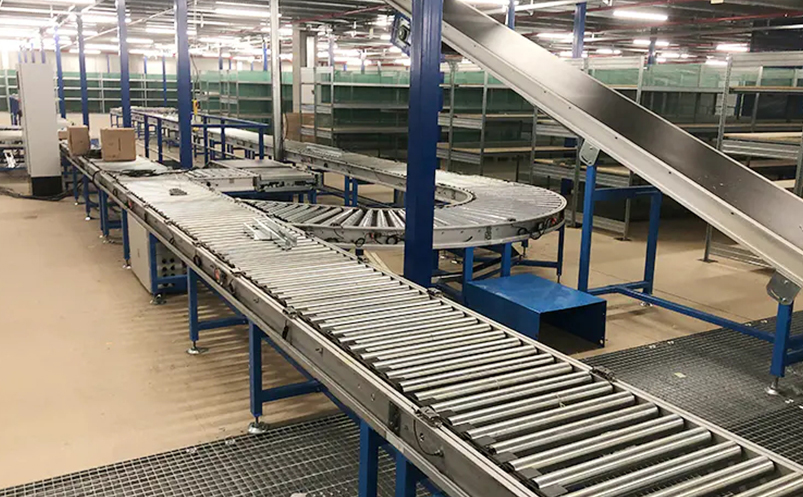
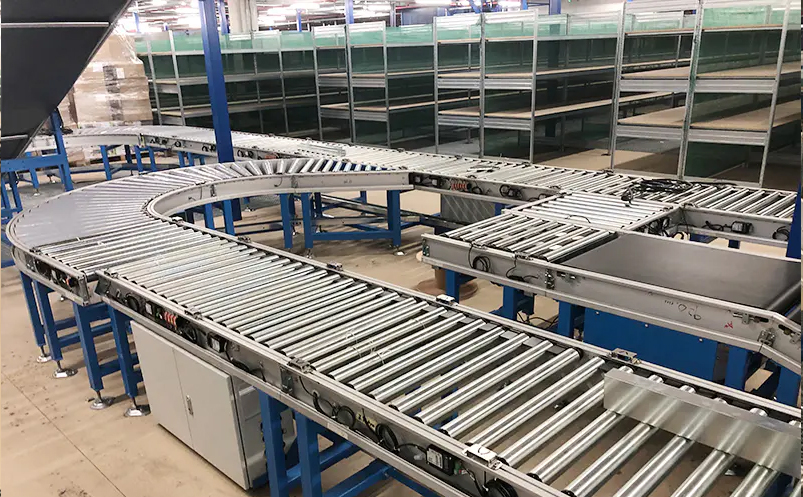
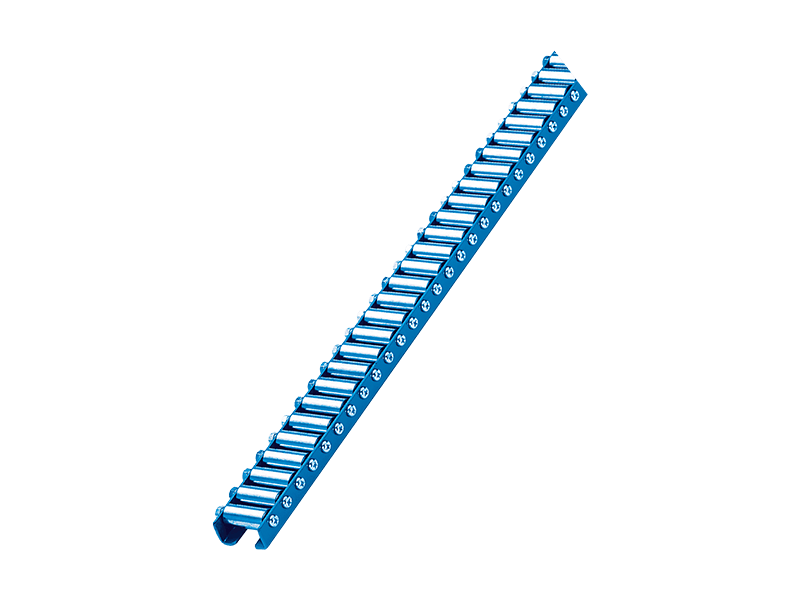 Custom Metal Fluent Wheel ConveyorFor flat-bottomed carton loads around 5–50 kg, this customizable wheel conveyor offers lighter, curve-friendly gravity flow without power.View Product →
Where Gravity Wheel Lines Earn Their Place, and Where They Do Not
Wheel conveyors pay off on flat-bottomed loads of roughly 5 to 50 kg travelling a few metres without power, and they cause trouble on soft, small or very heavy items.
Good fit
- Corrugated cases with a firm, flat base and no overhang
- Plastic totes and bins moving between packing stations
- Bench-to-wrapper runs where no power is available
- Flow rack lanes and first-in-first-out picking faces
- Portable truck unloading lines that are moved daily
Poor fit
- Soft sacks and bags that bulge between the wheels
- Items with a footprint under roughly 150 mm along the travel direction
- Pallets, drums and anything above about 50 kg per unit
- Rising routes where gravity cannot be used as the drive
- Freezer rooms where frost changes friction on the wheel surfaces
A misapplied wheel line fails predictably. Small items tip or drop through the gaps, soft bases drag, and heavy pallets deflect the axles until the rail visibly sags between supports. None of those problems can be fixed with more slope.
Slope does not compensate for the wrong conveyor. When a box stalls, the answer is usually pitch, wheel condition or frame level, not another degree of fall.
Pressed, Machined or Stainless: Choosing the Wheel
Wheel type fixes load rating, noise and corrosion resistance before the frame is even discussed.
Pressed wheels are stamped from sheet steel, run quietly and cost the least, which makes them the default for cartons and totes. Machined wheels are turned from bar stock with a truer running surface, so they tolerate heavier cases, abrasive grit and longer service before a bearing fails. Stainless wheels are the answer for washdown, cold stores and food areas, where a plated wheel starts to corrode within a season.
| Wheel type | Load per wheel | Best suited to | Watch out for |
| Pressed steel | 10-25 kg | Cartons, totes, general packing lines | Plating wears at the running surface under abrasive dust |
| Machined steel | 20-40 kg | Heavier cases, repeated long runs, rough floors | Noticeably higher cost per wheel |
| Stainless (SUS) | 8-20 kg | Washdown, cold rooms, food handling | Lowest load band and the highest unit price |
Those figures are per wheel, not per line. A 30 kg case carried on a 100 mm pitch with four wheels beneath it rarely loads any single wheel heavily, but a rigid drum resting on two wheels concentrates the load fast. Shock loads at transfer plates are what flatten wheels, not steady running.
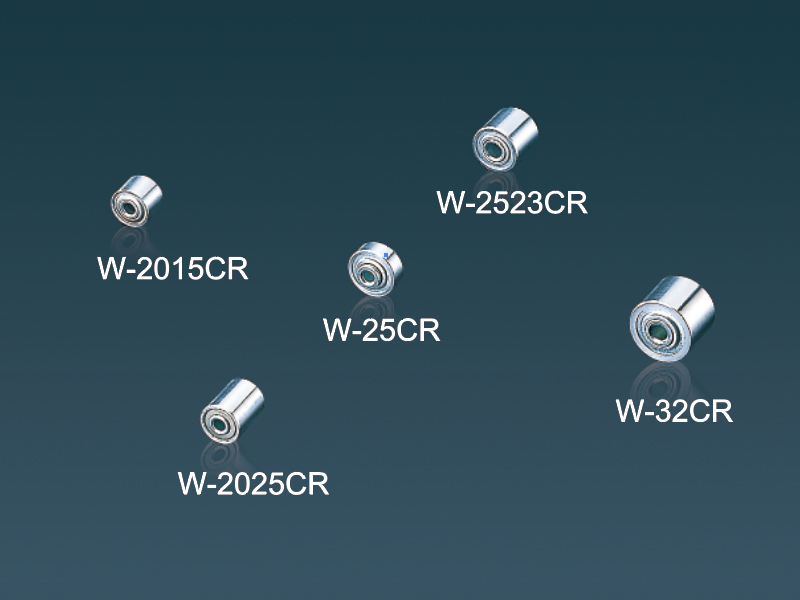 Custom Press Wheel Conveyor for Demanding Material FlowBuilt for warehouse and plant material flow, this press-wheel conveyor offers sealed, corrosion-resistant construction and customizable materials for harsh or humid environments.View Product →
Pitch, Slope and Load: Three Numbers That Decide Whether It Works
A wheel pitch of 75 to 150 mm, a fall of 2 to 4 percent and a load per wheel inside its rating will make most gravity lines run; get any one of the three wrong and the line stalls.
Pitch is the number people get wrong most often. A 100 mm pitch leaves roughly 100 mm between wheel centres, so an item with a footprint under about 150 mm along the direction of travel will tip into the gap. For small components, trays or a mixed carton stream, tighten the pitch instead of adding side guides that only hide the problem.
Slope is the second lever, and more is not better. Two to three percent suits heavy cases; four to five percent keeps light cartons rolling. Beyond five percent the load accelerates, slams the end stop and starts to climb the side rail on curves.
Frame, Finish and the Room It Lives In
The frame is where corrosion and deflection problems begin, so choose the finish from the washdown and humidity conditions rather than the price list.
Condensation and frost change friction on both wheels and rails. A line commissioned at 20 C on a 3 percent fall may need closer to 4 percent once the wheels sit at freezer temperature, so set the slope in the room the conveyor will actually run in, not on the workshop floor.
- Galvanized steel covers dry indoor work and gives years of service at the lowest cost.
- Powder coating looks better and resists light abrasion, but chips at the wheel staking points become rust traps.
- Stainless is the only sensible option in washdown areas, cold stores and rooms where condensation forms overnight.
- Support spacing of 1.2 to 1.5 m on long runs stops the rail deflecting under a moving load.
- Slotted brackets absorb thermal movement on stainless and aluminum frames instead of letting the rail buckle.
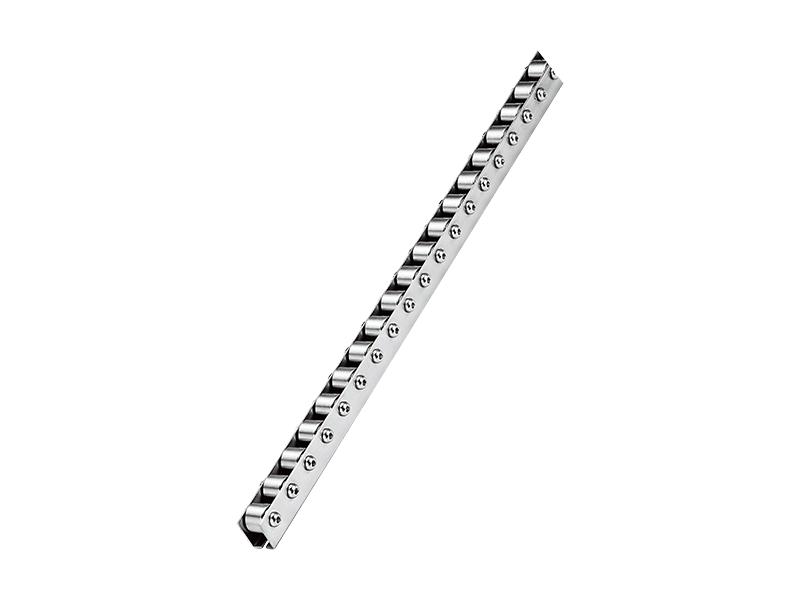 Stainless Steel SUS Wheel Conveyor SeriesFor cold, humid or washdown material handling, this stainless steel wheel conveyor range supports smooth gravity flow in food processing, warehousing and logistics.View Product →
Specifying a Line: Five Steps That Avoid Rework
Most wheel conveyor problems are decided at the quotation stage, so run these five checks before the drawing is signed off.
- Weigh the real load, not the product family. Take the heaviest case, measure it, and look at the bottom surface. A firm, flat base is a hard requirement, not a preference.
- Set the pitch from the smallest footprint. If the smallest item in the mix is 120 mm long, a 100 mm pitch is the practical limit; anything wider lets the item tip.
- Fix the fall and check the discharge. Two to four percent across the run, then decide what happens at the end: a stop, a turntable, or a powered takeaway section.
- Choose the wheel material from the environment. Washdown and cold stores justify stainless; dry packing halls rarely do.
- Price the supports, guides and transfers with the line. These are the parts added late, and they are the usual cause of rework on site.
Maintenance That Actually Matters
Steel wheel conveyors need very little maintenance, but the few items that matter degrade quietly rather than failing loudly.
- Spin every wheel by hand at each shift change; it should turn freely and stop without wobble.
- Check for loose wheels and elongated staking holes every six months on heavily used lines.
- Clear tape, shrink-wrap and grit from between the wheels, because debris raises rolling resistance across the whole run.
- Re-verify the fall after floor repairs or rack moves before blaming the conveyor itself.
If a box stops mid-line, look for one seized or damaged wheel before touching the slope. In practice a single dead wheel explains far more stalls than the gradient does, and a documented troubleshooting sequence for wheel conveyor systems saves the same conversation every month.
Frequently Asked Questions
How much weight can a metal fluent wheel conveyor carry?
It is the wheel that carries the load, not the frame. Pressed steel wheels are typically rated 10 to 25 kg each, and with three or more wheels under a case a standard line handles 30 to 50 kg units comfortably. Anything heavier belongs on a roller conveyor with larger rollers and heavier axles.
What slope should a gravity wheel conveyor have?
Start at 3 percent and adjust from there: 4 to 5 percent for light cartons, 2 to 3 percent for heavy cases. Test with the heaviest and the lightest item in the mix, because a slope that moves one perfectly can send the other into the end stop.
Can wheel conveyors handle fragile items?
They often handle fragile goods better than belts, because there is no belt friction and no impact at a transfer. The condition is a firm, flat base. Glassware in a rigid carton travels well; the same glassware loose in a soft bag will not.
When should I use a powered roller conveyor instead?
Choose powered rollers when loads exceed roughly 50 kg, when the route climbs or must be horizontal, when accumulation and zone release are needed, or when items have no flat base to roll on. Gravity wheels remain the cheaper answer for short, level, carton-duty runs.