

 ENG
ENG 中文简体
中文简体 русский
 Français
 Español
 日本語
日本語 عربى
عربىContent
- 1 Why Roller Conveyors Remain the Backbone of Material Handling
- 2 Types of Roller Conveyors and Their Operational Advantages
- 3 Key Efficiency Factors: How Roller Conveyors Outperform Manual Handling
- 4 Integration with Automation: Roller Conveyors in Smart Warehouses
- 5 Design and Layout Considerations That Maximize Efficiency
- 6 Maintenance Strategies That Protect Long-Term Efficiency
- 7 Industry-Specific Applications Driving Efficiency Gains
- 8 Evaluating ROI: Building the Business Case for Roller Conveyor Investment
Why Roller Conveyors Remain the Backbone of Material Handling
Roller conveyors improve efficiency in modern material handling systems by reducing manual labor, increasing throughput speed, minimizing product damage, and enabling seamless integration with automated sorting and packaging lines. Across warehousing, manufacturing, distribution, and logistics, they are the most widely deployed conveyor type — and for good reason.
Unlike belt conveyors or chain systems, roller conveyors use a series of rotating cylindrical rollers mounted in a frame to transport goods. This simple mechanical principle translates into a highly adaptable, low-maintenance solution that scales from small order-fulfillment operations to high-volume automotive or food-processing plants. Studies from the Material Handling Industry of America (MHIA) indicate that automated conveyor systems can reduce unit handling costs by up to 30% compared to purely manual operations.
The efficiency gains are not limited to speed. Roller conveyors reduce ergonomic strain on workers, lower the incidence of workplace injuries, and free human operators to focus on higher-value tasks such as quality inspection, exception handling, and supervisory oversight. As supply chains grow more complex and labor costs continue to rise, their strategic value only increases.
Types of Roller Conveyors and Their Operational Advantages
Choosing the right roller conveyor configuration is the first step toward measurable efficiency gains. Each type is engineered to solve specific throughput, space, and load challenges.
Gravity Roller Conveyors
Operating on a slight incline without any power source, gravity roller conveyors are ideal for short-distance movement of uniform, flat-bottomed loads such as cartons, totes, and pallets. Their near-zero energy consumption makes them a cost-efficient choice for shipping docks, assembly line accumulation zones, and order staging areas. Facilities that replace manual cart pushing with gravity roller lines consistently report a 15–25% reduction in product transit time within workstations.
Powered (Live) Roller Conveyors
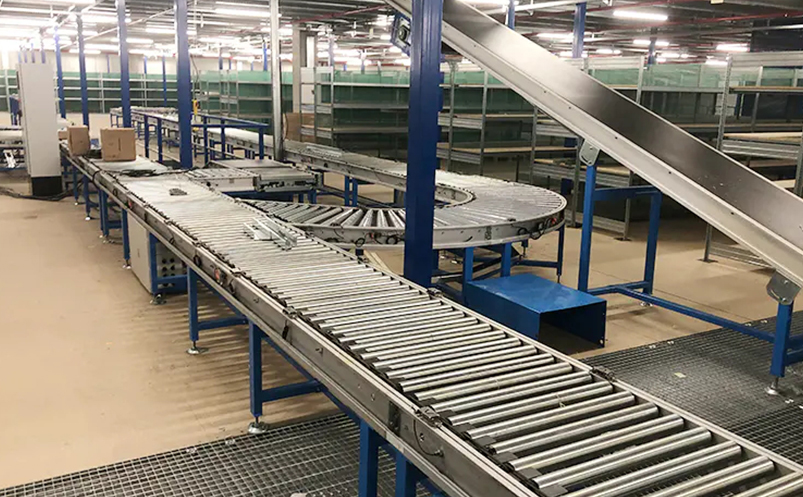
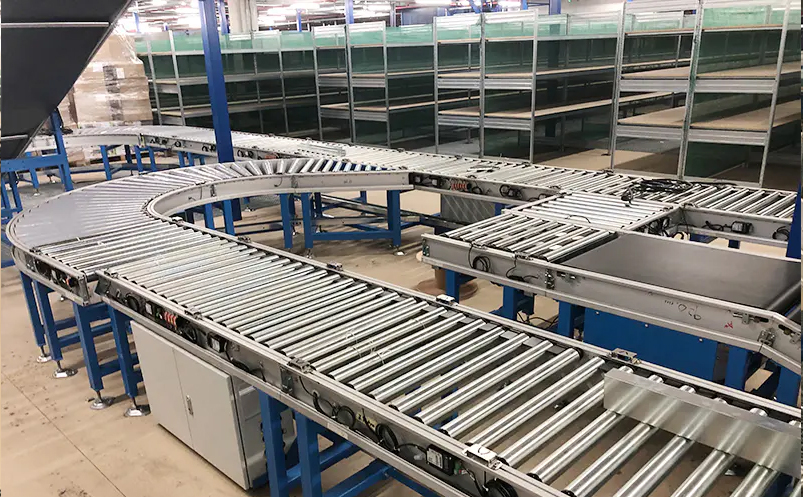
Driven by motors through belts, chains, or O-rings, powered roller conveyors move products at a controlled, consistent speed across flat or inclined surfaces. They integrate easily with PLCs (programmable logic controllers), allowing operators to adjust speed, direction, and zone activation in real time. This makes them the preferred choice for e-commerce fulfillment centers where dynamic order routing is essential.
Zero-Pressure Accumulation (ZPA) Roller Conveyors
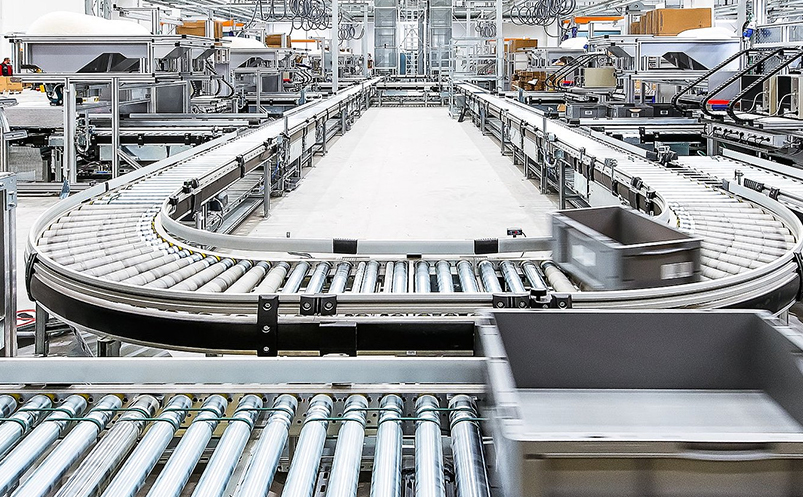
ZPA systems divide the conveyor into independently controlled zones. When a product stops in one zone, upstream zones halt automatically, preventing product collisions, pressure buildup, and damage. This is critical in fragile goods handling, where product damage rates can be reduced by over 40% compared to standard powered rollers. ZPA conveyors are widely used in pharmaceutical packaging, electronics manufacturing, and premium retail distribution.
Chain-Driven Live Roller (CDLR) Conveyors
Designed for heavy loads — typically pallets, drums, and industrial containers exceeding 500 kg — CDLR conveyors use chains rather than belts to drive rollers. They handle rough operating environments including outdoor docks, cold storage facilities, and foundries where belt-driven systems would degrade quickly.
| Conveyor Type | Power Required | Typical Load Capacity | Best Application |
|---|---|---|---|
| Gravity Roller | None | Up to 150 kg/unit | Shipping docks, staging |
| Powered Roller | Electric motor | Up to 300 kg/unit | Fulfillment centers, sorting |
| ZPA Roller | Zone-controlled motor | Up to 250 kg/unit | Fragile goods, pharma |
| CDLR | Chain-driven motor | 500 kg+ per unit | Heavy industry, cold storage |
Key Efficiency Factors: How Roller Conveyors Outperform Manual Handling
The efficiency improvements roller conveyors deliver can be grouped into four measurable dimensions: speed, labor utilization, error reduction, and energy consumption.
Throughput Speed and Consistency
Powered roller conveyors maintain a steady, programmable transport speed — typically between 0.1 and 2.5 meters per second — regardless of shift changes, fatigue, or workforce variability. In a high-volume distribution center processing 50,000 units per day, even a 10% improvement in average move speed translates to thousands of additional shipments per week. Amazon's fulfillment network, which relies heavily on roller and belt conveyor systems, handles more than 1.5 million packages daily at peak periods, a volume impossible to sustain with manual trolley operations.
Labor Cost Reduction and Workforce Reallocation
Every meter of roller conveyor installed effectively replaces repetitive manual transport labor. A single powered roller line can handle product movement previously requiring 2–4 workers per shift, allowing facilities to redeploy those workers to scanning, packing, or quality control roles that add greater value. Industry benchmarks suggest that facilities replacing manual push-carts with roller conveyors achieve labor savings of $80,000 to $200,000 annually per line, depending on shift length and local wage rates.
Error and Damage Reduction
Roller conveyors, especially ZPA systems, dramatically reduce mis-picks, dropped products, and collision damage inherent in manual handling. When paired with barcode scanners, RFID readers, or vision systems mounted above the conveyor, they also enable real-time track-and-trace at each station. This data capture layer is a key enabler of lean inventory management and inbound/outbound accuracy rates above 99.5%.
Energy Efficiency Compared to Alternative Systems
Modern motorized drive rollers (MDRs) consume significantly less power than traditional line-shaft or chain-driven conveyor systems. A typical MDR consumes just 24W per zone, versus 200–400W for equivalent line-shaft zones. Facilities upgrading to MDR-based roller conveyors routinely report energy savings of 50–70% on conveyor-related electricity costs — a compelling ROI argument alongside labor savings.
Integration with Automation: Roller Conveyors in Smart Warehouses
The true strategic value of roller conveyors in modern material handling systems lies not just in what they do independently, but in how well they integrate with broader automation ecosystems.
WMS and PLC Integration
Powered roller conveyors connect directly to warehouse management systems (WMS) and factory floor PLCs via Ethernet/IP, PROFINET, or Modbus protocols. This allows a WMS to dynamically route products across multiple conveyor lines based on order priority, destination dock, or product category — without human intervention. Zone speeds can be adjusted in milliseconds in response to downstream bottlenecks detected by sensors.
Sorter and Divert System Compatibility
Roller conveyors serve as the primary infeed and takeaway lanes for high-speed sorters — including cross-belt sorters, sliding shoe sorters, and pop-up wheel diverters. These sorter-conveyor combinations enable facilities to sort thousands of SKUs per hour to precise lanes. A mid-sized e-commerce distribution center typically achieves sorting rates of 3,000–8,000 units per hour using roller conveyor infeed paired with sliding shoe sorter technology.
Robotic Picking and Palletizing Interfaces
As collaborative robots (cobots) and autonomous mobile robots (AMRs) proliferate in warehouses, roller conveyors serve as the standardized handoff point between robotic and human workflows. Robots deposit picked items onto roller conveyor takeaway lanes; conveyor systems deliver goods to robotic palletizers or packing stations with precise timing. This tight integration eliminates buffering delays that previously required additional human operators to manage.
Cold Chain and Cleanroom Compatibility
Specialized roller conveyors manufactured from stainless steel or food-grade polymers are deployed in refrigerated distribution centers, pharmaceutical cleanrooms, and beverage production lines. These variants meet FDA, USDA, and EU GMP requirements while delivering the same throughput benefits as standard industrial configurations. The ability to integrate roller conveyors into regulated environments without compromising hygiene is a key differentiator over manual handling in these industries.
Design and Layout Considerations That Maximize Efficiency
The efficiency a roller conveyor delivers depends heavily on how the system is designed and laid out relative to the facility's operational flow. Several critical variables determine whether a conveyor installation reaches its potential.
- Roller spacing and diameter: Roller spacing must be matched to the smallest product footprint. A standard rule is that a minimum of three rollers must contact each product at any point. Incorrect spacing causes tip-overs, jams, and throughput loss.
- Load capacity per roller: Each roller has a rated dynamic load capacity. Overloading rollers accelerates bearing wear and causes premature failure, driving up maintenance costs and unplanned downtime.
- Zone length in accumulation systems: ZPA zone lengths should match the average product length to ensure precise stop positioning and minimize inter-zone gaps that reduce effective throughput.
- Curve and merge design: Poorly designed curves create lateral forces that damage products and misalign loads. Tapered-roller curves or roller curves with differential speed zones maintain lane discipline through bends.
- Elevation changes: Incline and decline roller sections must account for both gravity and motor torque to prevent runaway products or stalled loads — both of which disrupt downstream efficiency.
Simulation software is increasingly used during the design phase to model flow rates, identify bottlenecks, and validate zone configurations before physical installation. Leading system integrators now consider simulation a standard step in any project exceeding $500,000 in conveyor investment.
Maintenance Strategies That Protect Long-Term Efficiency
Efficiency gains from roller conveyors erode quickly without a proactive maintenance program. Unplanned downtime on a conveyor carrying 10,000 units per hour can cost a facility tens of thousands of dollars per hour in lost throughput, missed SLAs, and expedited re-routing costs.
Preventive Maintenance Intervals
A standard preventive maintenance (PM) schedule for powered roller conveyors includes weekly belt and O-ring inspections, monthly lubrication of bearings and chains, and quarterly checks of motor drives, sensors, and controls. Gravity roller systems require less intervention — typically a semi-annual check of roller spin-resistance and frame alignment. Facilities that implement structured PM programs report 60–80% fewer unplanned conveyor stoppages annually compared to reactive-only maintenance approaches.
Predictive Maintenance with IIoT Sensors
Industrial IoT (IIoT) vibration sensors, thermal cameras, and motor current monitors can now be mounted on conveyor components to detect bearing wear, belt slip, or motor overload before failure occurs. Predictive maintenance systems analyze this data in real time and generate work orders automatically when anomalies are detected. Early adopters of predictive conveyor maintenance report mean-time-between-failure (MTBF) improvements of 30–50% over baseline PM-only programs.
Spare Parts Inventory Optimization
Standardizing on a single roller diameter, bearing type, and drive roller motor across a facility dramatically reduces spare parts inventory costs and repair time. Facilities using five or more roller specifications often carry excessive safety stock; standardization typically allows a 40–60% reduction in spare roller and bearing inventory value without increasing downtime risk.
Industry-Specific Applications Driving Efficiency Gains
Roller conveyor efficiency improvements manifest differently across industries, each with distinct load types, regulatory requirements, and throughput demands.
E-Commerce and Retail Fulfillment
The surge in direct-to-consumer shipping has made roller conveyor networks the defining infrastructure of modern fulfillment centers. Carton flow racks feed picked items onto gravity roller takeaway lanes; powered roller mainlines carry totes to packing stations; ZPA accumulation conveyors buffer at label-print-and-apply stations. The result is a fully connected pick-to-ship flow that handles peak volumes — Black Friday, Singles' Day — without proportional labor scaling.
Automotive Manufacturing
CDLR and heavy-duty roller conveyors transport engine blocks, chassis components, and assembled powertrain units between machining cells, assembly stations, and quality inspection zones. Precise positioning accuracy — often within ±2mm — is achieved through servo-driven roller systems that stop loads at exact tooling or inspection points. Automotive assembly plants use roller conveyors across hundreds of meters of production floor, where seconds of delay per vehicle multiply across thousands of daily builds.
Food and Beverage Processing
Hygienic stainless steel roller conveyors with open-frame designs allow washdown cleaning between product runs — a regulatory requirement in food processing. Speed-adjustable powered rollers synchronize with filling, capping, and labeling machines to maintain continuous line flow without product backup or starvation. Facilities that convert manual hand-trolley transfer to roller conveyor flow between processing stages consistently reduce cross-contamination risk while increasing line OEE (overall equipment effectiveness) by 8–15 percentage points.
Airport Baggage Handling
One of the highest-density roller conveyor applications globally, airport baggage handling systems move millions of bags daily through check-in, screening, sortation, and loading in tightly choreographed sequences. Flat-belt and roller conveyor hybrids, combined with tilt-tray sorters, achieve baggage sortation accuracy rates above 99.8% at major international hubs — levels unattainable with manual cart-based systems.
Evaluating ROI: Building the Business Case for Roller Conveyor Investment
Justifying a roller conveyor investment requires quantifying benefits across multiple dimensions. A comprehensive ROI analysis should include the following cost and benefit categories.
- Direct labor savings: Calculate the headcount reduction or reallocation multiplied by fully loaded labor cost (wages + benefits + management overhead).
- Throughput revenue uplift: Estimate the revenue enabled by higher shipment volumes or faster order cycle times — particularly relevant for SLA-sensitive operations.
- Damage and error cost reduction: Quantify historical product damage claims, re-pick labor, and customer service costs that the conveyor system will eliminate.
- Energy savings: Calculate the kWh reduction from MDR or variable-frequency drive upgrades versus baseline power consumption.
- Maintenance cost avoidance: Project the reduction in unplanned downtime costs and emergency repair expenses under a proactive maintenance model.
- Compliance and safety cost avoidance: Include the estimated reduction in workers' compensation claims and ergonomic injury costs from eliminating manual material transport.
Most mid-scale roller conveyor projects in distribution and manufacturing achieve a full ROI within 18 to 36 months, with larger, highly automated systems recovering investment in under 24 months due to the compounding of labor, throughput, and damage savings. As labor costs continue to rise globally and e-commerce volume growth shows no signs of slowing, the financial case for roller conveyor investment is only strengthening.