

 ENG
ENG 中文简体
中文简体 русский
 Français
 Español
 日本語
日本語 عربى
عربىContent
Where Accumulation Fits in a Parcel Sorting Line
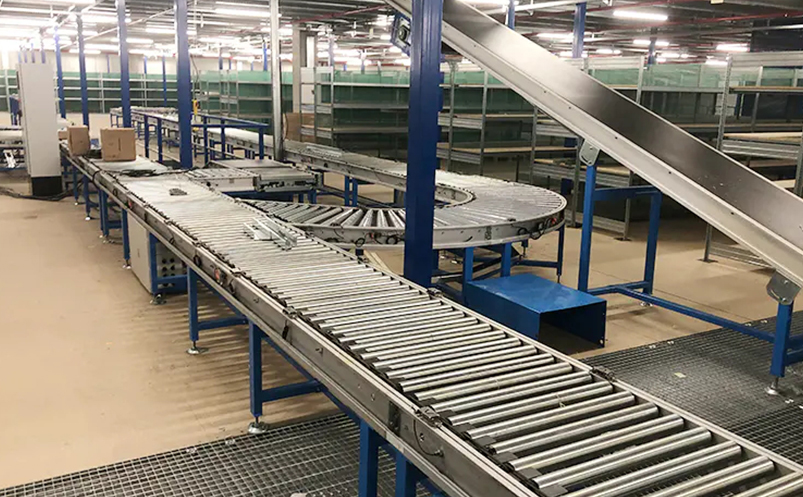
A sortation line rarely moves at one constant speed. Packages arrive from induction in bursts, scanners and volume checks take a fraction of a second longer on some items than others, and the sorter itself can only divert parcels as fast as its chutes clear. Accumulating roller conveyors built for zone-by-zone buffering sit between these mismatched stages, holding parcels in place until the next section is ready to take them.
Without that buffer, a hub has two choices, and neither works well at scale: slow the whole line down to the pace of its slowest stage, or let packages pile up and collide at every point where speeds change. Driven conveyor lines built to keep pace with variable upstream speeds solve this by treating each stretch of the conveyor as its own controllable segment rather than one continuous belt of motion.
How Zero-Pressure Accumulation Actually Works
Each accumulation zone typically runs 3 to 4 feet long and carries its own sensor, usually a photoeye positioned just ahead of the zone boundary. When a parcel enters and trips the sensor, that zone's rollers keep turning until the parcel reaches the stop point, then shut off. The parcel sits still, and the zone behind it does the same the moment it fills, creating a chain of stopped packages that never touch or push against one another.
That last point is what separates zero-pressure accumulation from older, continuous-pressure designs, where packages backed up against each other under load. Boxes with weak seams or fragile contents took the brunt of that pressure. Friction (positive-up) roller conveyors that release product on demand extend the same logic to controlled release, letting a downstream process pull one parcel forward at a time instead of a whole queue moving at once.
The practical result is fewer torn labels, fewer crushed corners, and a sorting line that can absorb short bursts of volume without anyone touching an emergency stop.
Merging, Induction, and Keeping the Sorter Fed
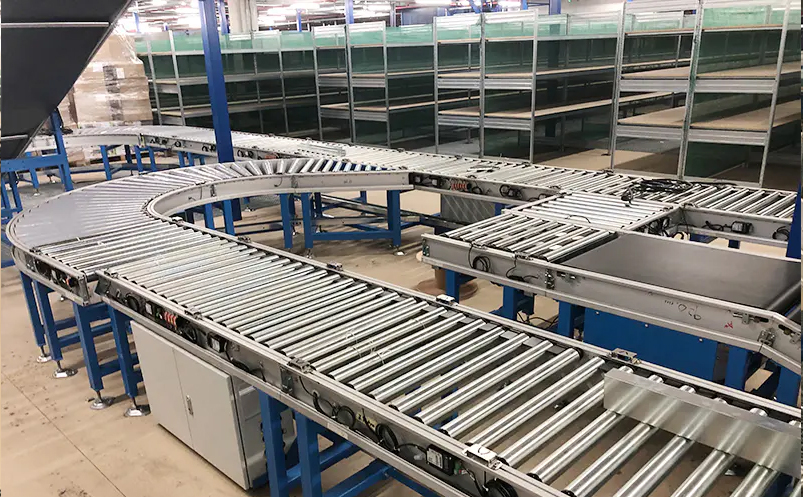
Most parcel hubs feed a single sorter from several induction lanes at once, and accumulation zones are where those lanes actually come together. Holding parcels just before the merge point lets the control system release them one at a time, spaced correctly, rather than letting two lanes arrive at the same junction simultaneously. Turning belt conveyors used to merge parcels from multiple induction lanes often sit right alongside these buffer zones for exactly that reason.
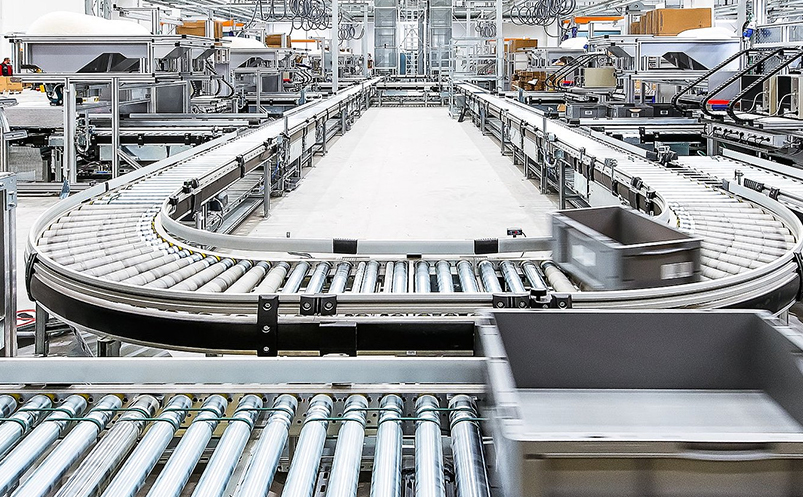
The same principle applies on the sorter's infeed side. A high-speed sortation system loses throughput fast if it sits idle waiting for the next parcel, and it jams just as fast if two arrive too close together. Taper roller conveyors for curved transitions into the sorter handle the geometry of feeding parcels into a rotating or tilt-tray system, while the accumulation zone just upstream makes sure there's always exactly one parcel ready to go.
Sizing and Layout Choices for High-Volume Hubs
Zone length and count come down to parcel size range and peak arrival rate. Hubs handling small, uniform parcels can run shorter zones and pack more of them into a given stretch of conveyor; operations with mixed carton sizes generally need longer zones to avoid a large box straddling two sensor boundaries at once. Getting this wrong shows up quickly during peak season, when short buffers simply run out of room and start backing pressure into the induction area.
Not every accumulation point needs the same drive strength. Lighter parcels moving through lower-throughput zones don't require the load capacity of a full chain-driven system, and O-belt drive roller conveyors for lighter, lower-cost accumulation zones can cover that role without over-specifying the equipment. Matching drive type to actual load, rather than defaulting to the heaviest option everywhere, is usually where the real cost savings show up across a full sortation layout.