

 ENG
ENG 中文简体
中文简体 русский
 Français
 Español
 日本語
日本語 عربى
عربىContent
- 1 How an Accumulating Conveyor Works
- 2 Types of Accumulating Conveyors
- 3 Where Accumulating Conveyors Are Used
- 4 Benefits of Using an Accumulating Conveyor
- 5 Key Specifications to Evaluate When Choosing an Accumulating Conveyor
- 6 Common Challenges and How to Address Them
- 7 Accumulating Conveyor vs. Standard Conveyor: A Practical Comparison
- 8 Installation and Integration Best Practices
- 9 Conclusion
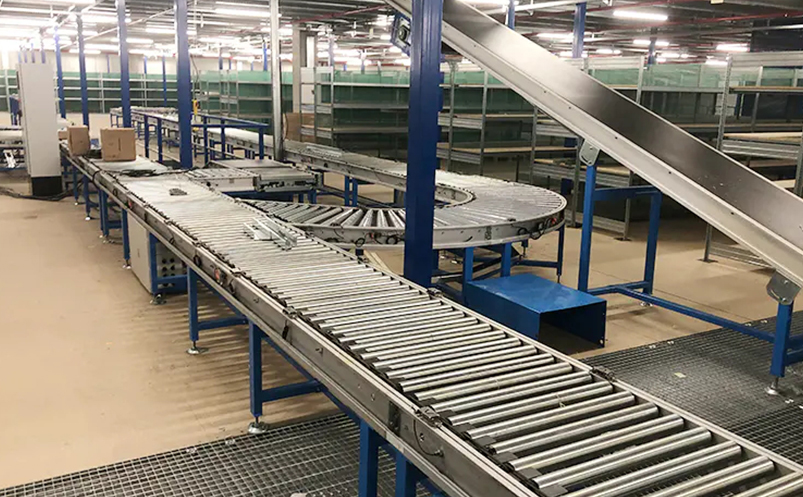
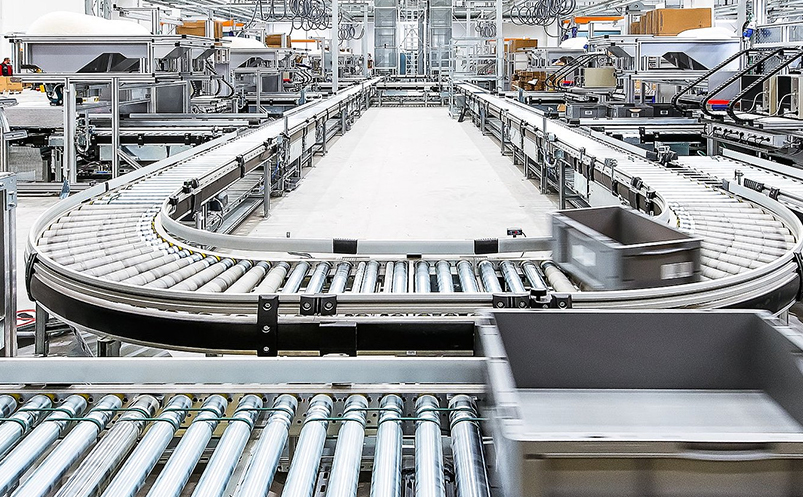
An accumulating conveyor is a type of conveyor system designed to temporarily hold, buffer, or queue products without stopping the entire line — allowing items to accumulate in a controlled zone while downstream processes catch up. Unlike standard conveyors that move products continuously at a fixed pace, accumulating conveyors decouple upstream and downstream operations, which is essential for high-volume manufacturing and distribution environments.
Industries ranging from e-commerce fulfillment to automotive assembly rely on these systems to eliminate bottlenecks, protect fragile products, and increase throughput — often achieving efficiency gains of 20–40% compared to rigid, non-accumulating lines.
How an Accumulating Conveyor Works
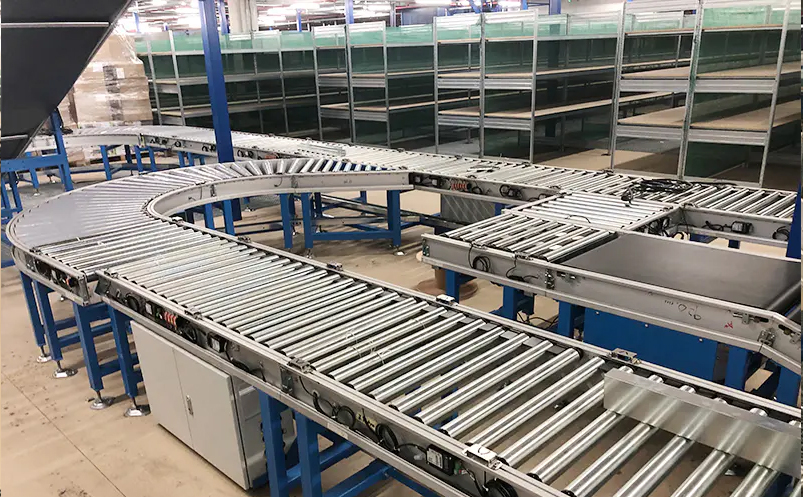
The core principle behind accumulating conveyors is zone control. The conveyor belt or rollers are divided into independently controlled segments. Sensors — typically photoelectric eyes or pressure sensors — detect when a product is present in a zone. If the downstream zone is occupied, the upstream zone pauses or slows, holding the product in place until space becomes available.
This process plays out across every zone simultaneously, creating a smooth, continuous flow from input to output without collisions or pile-ups.
Key Components
- Drive mechanism — Motor-driven rollers, belt-under-roller (BUR), or lineshaft drives power each zone independently.
- Sensors — Detect product presence and signal the controller to pause or release zones.
- Zone controller — A PLC or embedded microcontroller that processes sensor data and coordinates zone operation.
- Frame and rollers/belt — The physical structure, typically aluminum or steel, supporting the load.
Types of Accumulating Conveyors
Different applications demand different accumulation technologies. The main types vary in how they drive products and how gently they handle them during accumulation.
| Type | Drive Method | Back Pressure | Best For |
|---|---|---|---|
| Zero-Pressure (ZPA) | Motorized rollers per zone | None | Fragile or high-value goods |
| Low-Pressure | Lineshaft with slip clutches | Low | Uniform, robust products |
| Belt-Under-Roller (BUR) | Continuous belt lifts rollers | Minimal | Small or irregular items |
| Flat Belt Accumulating | Segmented belt sections | Moderate | Cartons and totes |
Zero-Pressure Accumulation (ZPA)
ZPA is the gold standard for sensitive products. Each zone stops independently, so products never touch one another during accumulation. This is critical in industries like electronics, pharmaceuticals, and consumer goods packaging where even minor contact can cause damage or misalignment. ZPA systems can reduce product damage rates by up to 90% compared to traditional line-pressure conveyors.
Low-Pressure Accumulation
Low-pressure systems allow light contact between products during queuing. They use a single drive motor with slip clutches on each zone roller, making them mechanically simpler and less expensive. They work well for sturdy items like filled corrugated boxes in warehouse environments.
Where Accumulating Conveyors Are Used
Accumulating conveyors appear in virtually every sector where goods move through a multi-step process. Below are the most common and impactful applications.
E-Commerce and Distribution Centers
Fulfillment operations at companies like Amazon and DHL use accumulating conveyors to buffer packages between sorting, scanning, and labeling stations. During peak seasons, a single sortation system may process over 10,000 packages per hour, and accumulation zones prevent gridlock when downstream sorters temporarily fall behind.
Food and Beverage Processing
Bottling and canning lines use accumulating conveyors to create surge capacity between filler and capper stations. When a capper undergoes a brief changeover, the accumulator holds filled but uncapped bottles — preventing the filler from stopping. This is why most high-speed beverage lines feature a minimum of 30–60 seconds of buffer capacity built into their accumulation tables.
Automotive Assembly
In body-in-white (BIW) assembly, accumulating conveyors queue car bodies between welding and painting stations. Because paint cure cycles vary, accumulation ensures a steady, uninterrupted flow of bodies into the paint booth — a station where stopping the line costs manufacturers thousands of dollars per minute.
Pharmaceutical and Medical Device Manufacturing
Strict product integrity requirements make ZPA accumulating conveyors the only viable choice in cleanroom and sterile environments. Units can queue before inspection stations without physical contact, maintaining batch integrity and traceability.
Benefits of Using an Accumulating Conveyor
The operational advantages of accumulating conveyors are well-documented and measurable:
- Reduced downtime: Buffers absorb stoppages at one station without halting the entire line. Facilities report overall equipment effectiveness (OEE) improvements of 15–25% after installing accumulation zones.
- Higher throughput: Decoupled stations can each run at their optimal speed, rather than being constrained to the pace of the slowest link.
- Product protection: ZPA systems eliminate the collision forces that cause damage, label scuffing, and orientation loss.
- Flexible line design: Accumulation zones allow engineers to connect processes that run at different speeds or have variable cycle times without complex synchronization.
- Labor optimization: Fewer workers are needed to manually intervene when jams or slowdowns occur, since the system self-manages flow.
Key Specifications to Evaluate When Choosing an Accumulating Conveyor
Selecting the right accumulating conveyor requires matching the system's mechanical and control capabilities to your product and process requirements. Consider these critical parameters:
- Zone length and number of zones — Zone length should be slightly longer than your longest product. More zones provide finer control but increase cost and complexity.
- Load capacity per zone — Define the maximum product weight. Standard ZPA rollers handle 50–150 lbs per zone; heavy-duty versions can exceed 500 lbs.
- Conveyor speed — Expressed in feet per minute (FPM). Most accumulating conveyors operate between 30 and 120 FPM. Match this to your takt time.
- Roller pitch — The spacing between rollers. A common rule is that products must always contact at least three rollers simultaneously to avoid tipping or stalling.
- Control integration — Verify compatibility with your warehouse management system (WMS) or PLC architecture. Modern systems support EtherNet/IP, Profibus, or IO-Link.
- Accumulation mode — Choose between singulation (one product released at a time), slug release (batch release), or train mode, depending on downstream requirements.
Common Challenges and How to Address Them
Even well-designed accumulating conveyor systems encounter operational issues. Knowing these in advance helps facility engineers plan mitigation strategies.
Inconsistent Product Dimensions
Products that vary significantly in length, width, or base flatness can confuse sensors or stall between zones. The solution is to use adjustable-sensitivity sensors and to audit the product mix before finalizing zone length. A zone length of at least 110% of the longest product is a practical starting point.
Sensor Drift and False Triggers
Dust, condensation, and label reflectivity can cause photoelectric sensors to trigger falsely or miss products entirely. Scheduled preventive maintenance intervals of every 500–1,000 operating hours, combined with diffuse-reflective sensors with background suppression, dramatically reduce nuisance faults.
Backlog Propagation
If the downstream process stops for too long, the accumulation zone fills entirely and the upstream line must halt. Sizing the buffer correctly — typically 2–5 minutes of upstream throughput — provides adequate protection for most planned stoppages (changeovers, inspections) without over-investing in conveyor length.
Accumulating Conveyor vs. Standard Conveyor: A Practical Comparison
Understanding when to upgrade from a standard conveyor to an accumulating model comes down to your line's operational demands and product sensitivity.
| Feature | Standard Conveyor | Accumulating Conveyor |
|---|---|---|
| Product flow control | Continuous, fixed speed | Zone-by-zone, adaptive |
| Buffer capability | None | Yes (configurable duration) |
| Product contact during stop | High (line pressure) | None (ZPA) to low |
| Initial cost | Lower | Higher (30–100% premium) |
| Maintenance complexity | Low | Moderate to high |
| Suitable for mixed SKUs | Limited | Yes |
The higher upfront cost of an accumulating conveyor is typically justified when line stoppages cost more than $500 per hour, when products are fragile or high-value, or when throughput requirements exceed what a rigid line can sustain.
Installation and Integration Best Practices
Successful deployment of an accumulating conveyor goes beyond selecting the right equipment. Integration with existing systems is often where projects succeed or fail.
- Map your material flow first. Document every upstream and downstream process, including their average cycle time and variability, before specifying accumulation zone lengths.
- Simulate before commissioning. Many conveyor OEMs now offer discrete-event simulation tools. A simulation can reveal whether your buffer is sized correctly and identify unexpected jam points before installation.
- Plan for future SKUs. If your product mix may change, specify wider frames (typically 24–36 inches) and programmable zone controllers that can be reconfigured without hardware changes.
- Train maintenance staff on zone logic. Technicians who understand how zone release logic works can diagnose most sensor and controller faults in minutes rather than hours.
- Establish a preventive maintenance schedule. Roller bearings, belt tension, and sensor alignment should be checked at defined intervals — typically every 1,000–2,000 operating hours depending on the environment.
Conclusion
An accumulating conveyor is one of the most impactful investments a production or distribution facility can make. By decoupling process stages and providing on-demand buffering, it transforms a fragile, interdependent line into a resilient, high-throughput system. The right accumulating conveyor — properly specified, integrated, and maintained — can pay for itself within 12 to 24 months through reduced downtime, fewer damaged products, and increased output. Whether you're evaluating ZPA roller conveyors for electronics assembly or flat-belt accumulators for a packaging line, the underlying principle is the same: controlled flow beats constant pressure every time.