

 ENG
ENG 中文简体
中文简体 русский
 Français
 Español
 日本語
日本語 عربى
عربىContent
- 1 What Are Roller Conveyors and Why Do They Matter?
- 2 Applications of Roller Conveyors in Warehousing
- 3 Roller Conveyors in Logistics and Distribution Centers
- 4 Manufacturing Applications: Moving Products Through Production
- 5 Comparing Roller Conveyor Types by Application
- 6 Integration with Automation and Warehouse Management Systems
- 7 Key Selection Criteria When Specifying Roller Conveyors
- 8 The Future of Roller Conveyor Technology
What Are Roller Conveyors and Why Do They Matter?
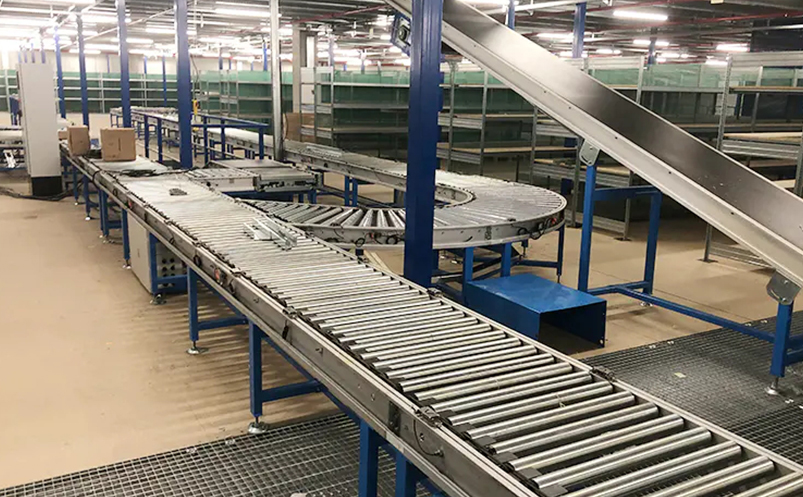
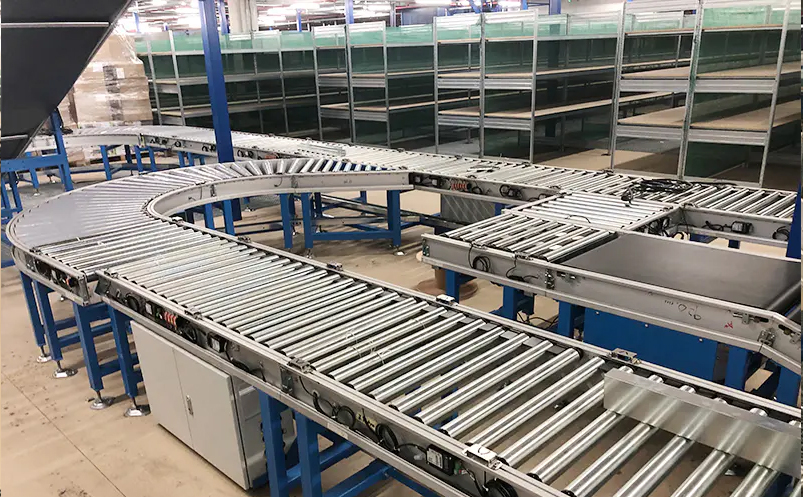
Roller conveyors are one of the most versatile and widely deployed material handling systems in the world. By using a series of rotating cylinders — mounted in a frame and spaced to support the load — they allow goods to move horizontally, on an incline, or around curves with minimal friction and without complex mechanical intervention. Unlike belt conveyors, which use a continuous surface, roller conveyors support the product directly on individual rollers, making them ideal for rigid-bottomed loads such as cartons, pallets, totes, and industrial containers.
Their appeal comes down to three core advantages: low energy consumption, high throughput capacity, and ease of maintenance. A gravity roller conveyor requires no power at all; a powered roller conveyor consumes far less electricity per unit moved than most alternative systems. In facilities processing thousands of SKUs daily, these efficiencies compound into significant operational savings.
Roller conveyors are broadly divided into two categories:
- Gravity Roller Conveyors — rely on slope or manual push to move goods; zero energy cost, ideal for short-distance transfer and picking lines.
- Powered (Live) Roller Conveyors — use motorized rollers or belt-driven rollers to move loads at controlled speeds; suitable for long runs, automated sorting, and accumulation zones.
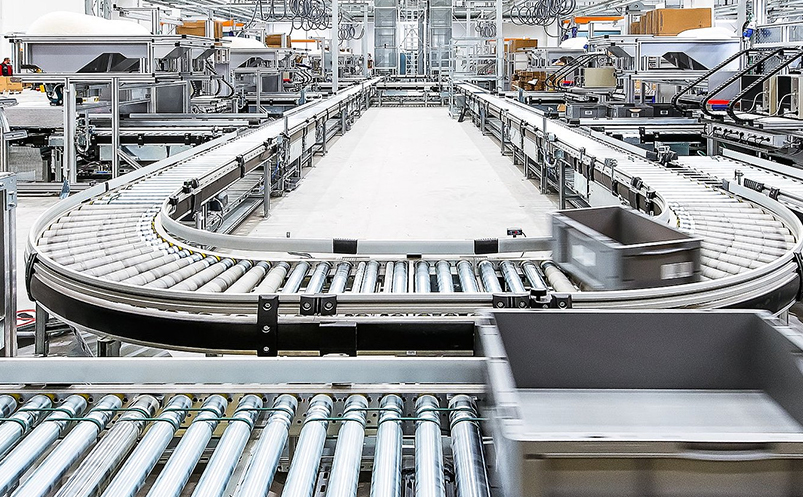
A third variant — zero-pressure accumulation (ZPA) conveyors — uses sensors and individually controlled motor rollers to stop products without contact between items, preventing damage to fragile or high-value goods. This technology has become standard in e-commerce fulfillment and pharmaceutical distribution.
Applications of Roller Conveyors in Warehousing
Modern warehouses depend on roller conveyors at almost every stage of the goods flow — from inbound receiving docks to outbound shipping lanes. Their modular design allows system integrators to build networks that match the exact footprint and throughput requirements of any facility.
Receiving and Inbound Sortation
At receiving docks, powered roller conveyors carry inbound pallets and cartons from truck trailers into the warehouse. Integrated with barcode scanners or RFID readers positioned above the conveyor line, the system automatically identifies each item and routes it to the correct put-away location or quality control station. This eliminates the need for manual forklift movements across the dock floor, reducing both labor costs and the risk of product damage during inbound handling.
Order Picking and Pick-to-Light Systems
Gravity roller conveyors are extensively used in pick module racking systems. Cartons flow forward on inclined roller lanes as items are removed from the front, keeping product continuously available to the picker without restocking delays. When combined with pick-to-light technology, these gravity flow lanes enable pick rates exceeding 300 lines per hour per operator in high-velocity warehouses, a performance level that far surpasses traditional shelf-and-trolley picking.
Accumulation and Staging Before Shipping
Before orders leave the building, they need to be consolidated, labeled, weighed, and loaded onto outbound trucks. Zero-pressure accumulation roller conveyors handle this staging process by holding completed orders in a buffer zone without creating back-pressure between cartons. As each truck bay becomes available, the system releases the corresponding batch automatically, keeping shipping lanes fluid and reducing truck dwell time at the dock.
Pallet Handling and Storage Systems
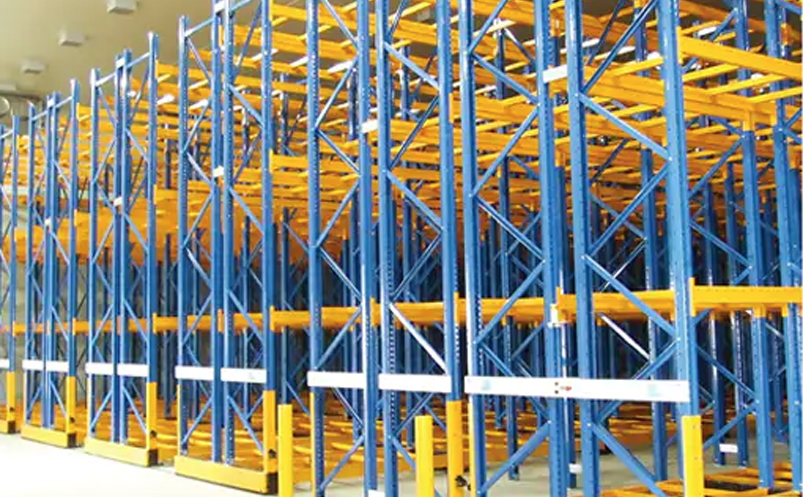
Heavy-duty roller conveyors rated for loads of 1,000 kg or more per meter serve automated pallet storage and retrieval systems (AS/RS). In high-bay warehouses, pallet conveyors act as the interface between floor-level transfer vehicles and the vertical storage aisles managed by stacker cranes or shuttle systems. The precision and repeatability of powered roller conveyors ensures that pallet positioning tolerances remain within the ±5 mm range required for automated crane pick-up.
Roller Conveyors in Logistics and Distribution Centers
The rapid growth of e-commerce has fundamentally reshaped logistics infrastructure. Distribution centers now handle a far wider mix of package sizes, weights, and destinations than traditional warehouses — and roller conveyors have adapted accordingly.
Parcel Sortation at Scale
High-speed logistics hubs process tens of thousands of parcels per hour. Roller conveyors form the backbone of these sortation networks, transporting packages from induction points through scan tunnels to divert points where tilt-tray sorters, crossbelt sorters, or pusher arm units redirect each item to its destination chute. The conveyor network must sustain throughput rates of up to 15,000 parcels per hour while maintaining precise spacing between items to prevent scan errors and mis-sorts.
Last-Mile Fulfillment and Cross-Docking
Cross-docking facilities — where inbound goods are immediately transferred to outbound vehicles without being stored — rely on roller conveyors to bridge the gap between receiving and shipping in the shortest possible time. In these environments, conveyor layouts are designed as straight-line or L-shaped transfers rather than complex loops, maximizing flow speed and minimizing the footprint of the transfer zone. Same-day and next-day delivery commitments make the speed of cross-dock operations a direct competitive factor.
Returns Processing
Reverse logistics is one of the fastest-growing segments in distribution center design. Returned parcels arrive in irregular volumes, often in damaged packaging and with incomplete labeling. Roller conveyor networks equipped with manual inspection stations along the line allow operators to assess return condition, re-scan items, and route them to the correct disposition lane — restock, refurbish, liquidation, or disposal — without manual carrying. Efficient returns processing directly reduces the cost-per-return, a metric that has become critical as return rates in e-commerce reach 20–30% across many product categories.
Cold Chain and Pharmaceutical Logistics
Roller conveyors used in cold chain facilities are engineered for low-temperature environments, with stainless steel rollers, sealed bearings, and motors rated for operation down to −30°C. In pharmaceutical distribution centers, where chain-of-custody tracking is a regulatory requirement, conveyor-integrated checkweighers and vision systems validate every shipment on the line, ensuring that weight, label content, and seal integrity all meet compliance standards before dispatch.
Manufacturing Applications: Moving Products Through Production
In manufacturing environments, roller conveyors serve a different but equally critical role: they connect production stages, support assembly operations, and manage work-in-progress (WIP) flow between machines and workstations. The key requirement here is not just speed, but precise control over product positioning and dwell time at each station.
Assembly Line Integration
Paced roller conveyors in automotive, appliance, and electronics assembly lines move partially assembled products from one workstation to the next at a fixed cycle time. The conveyor speed is synchronized to the takt time — the rate at which a product must be completed to meet demand. Individual motor rollers in ZPA zones allow operators to pause a product at their station without stopping the entire line, increasing line flexibility and reducing cascading delays when one station falls behind.
Automated Painting, Coating, and Curing Lines
Roller conveyors carry metal panels, plastic housings, and wooden components through spray booths, powder coating ovens, and UV curing tunnels. In these applications, conveyors must resist heat (operating temperatures can exceed 200°C in curing ovens), chemical exposure from paints and solvents, and the accumulation of particulate matter on roller surfaces. Specialty high-temperature rollers with ceramic or fiberglass cores are standard in these installations, while easy-clean roller profiles prevent coating buildup that would otherwise compromise product quality.
Food and Beverage Processing
The food processing industry demands conveyors that meet strict hygiene standards — specifically, the guidelines set by organizations such as the EHEDG (European Hygienic Engineering and Design Group) and NSF International. Sanitary roller conveyors use stainless steel frames and rollers, open-frame construction to prevent water and debris accumulation, and tool-free disassembly for thorough cleaning. Common applications include conveying packaged goods through metal detectors and checkweighers, transporting trays through cook-chill tunnels, and moving beverage cases from filling lines to palletizers.
Heavy Industry: Steel, Lumber, and Stone
At the heavy end of the spectrum, roller conveyors handle steel coils, stone slabs, structural beams, and lumber planks that would be impractical to move on belt or chain conveyors. Heavy-duty rollers with wall thicknesses up to 10 mm and shaft diameters of 50–80 mm support point loads that would damage lighter conveyor types. In steel service centers, precision roller tables position material for laser cutters, plasma cutters, and press brakes with millimeter-level accuracy, enabling automated cutting programs to run without manual adjustment between pieces.
Comparing Roller Conveyor Types by Application
| Conveyor Type | Best For | Typical Load Range | Power Required |
|---|---|---|---|
| Gravity Roller | Pick lanes, short transfers, staging | 5–150 kg/m | None |
| Belt-Driven Live Roller | Long runs, uniform loads | 10–300 kg/m | Low |
| Zero-Pressure Accumulation | Fragile goods, automated sorting, WIP buffers | 5–200 kg/m | Medium |
| Heavy-Duty Pallet Roller | AS/RS interfaces, pallet transfers, steel/stone | 500–5,000 kg/m | Medium–High |
| Sanitary Stainless Roller | Food processing, pharma, cleanrooms | 10–200 kg/m | Low–Medium |
Integration with Automation and Warehouse Management Systems
The true value of roller conveyors is unlocked when they operate as part of a connected automation ecosystem rather than as isolated transport links. Modern roller conveyor systems communicate with warehouse management systems (WMS), warehouse control systems (WCS), and programmable logic controllers (PLCs) through industrial Ethernet protocols such as EtherNet/IP or PROFINET.
This connectivity enables several advanced capabilities:
- Dynamic routing: The WCS can redirect individual cartons on the fly based on real-time order priority, lane congestion, or destination availability.
- Predictive maintenance: Motor roller controllers monitor current draw, temperature, and vibration, alerting maintenance teams to roller failures before they cause line stoppages — a capability that can reduce unplanned downtime by up to 30% according to industry studies.
- Energy management: Zones without product present automatically enter sleep mode, with rollers spinning down to reduce power consumption during low-activity periods.
- Digital twin simulation: Facility designers use virtual models of roller conveyor networks to simulate throughput, identify bottlenecks, and test layout changes before committing to physical installation.
As robotics becomes more prevalent on the warehouse floor, roller conveyors serve as the handoff point between mobile robots (AMRs) and fixed conveyor infrastructure. AMRs deliver totes or shelves to conveyor induction stations, then return for the next load — a hybrid model that combines the flexibility of mobile robots with the throughput consistency of fixed conveyor networks.
Key Selection Criteria When Specifying Roller Conveyors
Selecting the right roller conveyor for a given application requires evaluating several interdependent parameters. Specifying incorrectly — even for a single variable — can lead to premature roller failure, product damage, or throughput shortfalls that are difficult and expensive to correct after installation.
- Load weight and distribution: Total load weight per meter and the footprint of the load's base determine roller diameter, spacing, and frame gauge. A load with a small base area creates high point loads even if the total weight is modest.
- Product base condition: Roller conveyors require a rigid, flat base. Soft-bottomed bags, irregular shapes, or very small products may require a belt conveyor or slider bed instead.
- Speed requirements: Conveyor speed affects both throughput and the risk of product tipping or shifting. Speeds above 0.5 m/s typically require end stops, guide rails, or transition ramps at junctions.
- Environment: Temperature extremes, humidity, dust, chemicals, and washdown requirements all drive material and bearing specification choices.
- Accumulation need: If products must wait on the conveyor without building up back-pressure, ZPA technology is mandatory regardless of the additional cost.
- Layout constraints: Curves, inclines, declines, and vertical transfers each require specific roller conveyor variants — tapered rollers for curves, cleated belt-over-roller sections for steep inclines, and spiral conveyors for multi-level transfers.
The Future of Roller Conveyor Technology
Roller conveyors are not a static technology. Several trends are reshaping how they are designed and deployed across warehousing, logistics, and manufacturing.
Individual motor rollers (IMRs) — small brushless DC motors built directly into each roller — are replacing traditional line-shaft and belt-drive systems. IMRs allow each roller to be independently controlled, enabling extremely fine-grained zone management and opening the door to AI-driven conveyor optimization that adjusts zone behavior in real time based on system load.
Lightweight composite rollers made from carbon fiber or reinforced polymer cores reduce the rotational inertia of each roller, allowing faster acceleration and deceleration without increasing motor size — a significant advantage in high-speed sortation environments where items need to be precisely spaced before reaching a divert point.
Plug-and-play conveyor modules with standardized mechanical and electrical interfaces are making it faster to deploy, reconfigure, and scale conveyor networks in response to changing business requirements. A distribution center that previously required months to commission a conveyor system can now install and commission modular sections in weeks, significantly reducing the capital commitment required before a new facility goes live.
As supply chains continue to demand higher speed, greater flexibility, and lower operating cost, roller conveyors — in ever more intelligent and adaptable forms — will remain at the center of how goods move through the built environment.